
Last updated October 16, 2026
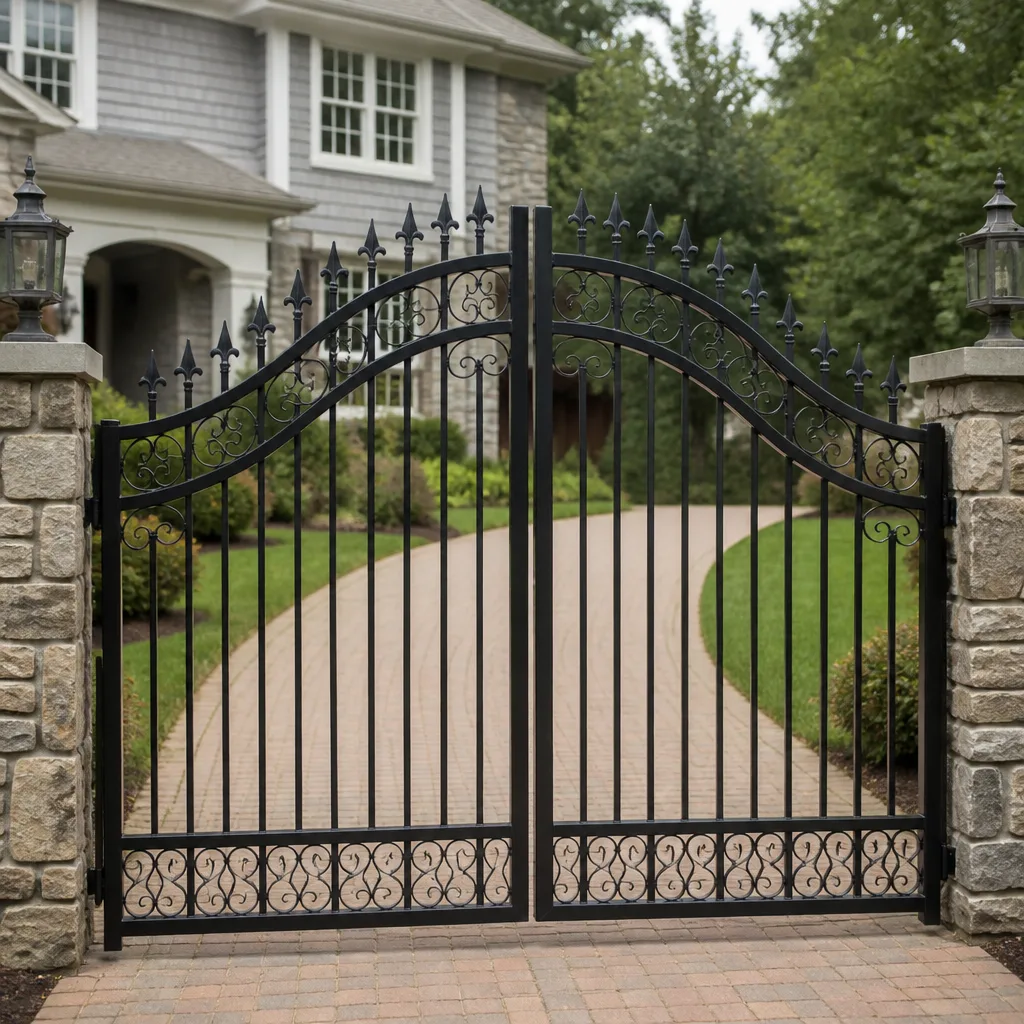 Wrought iron
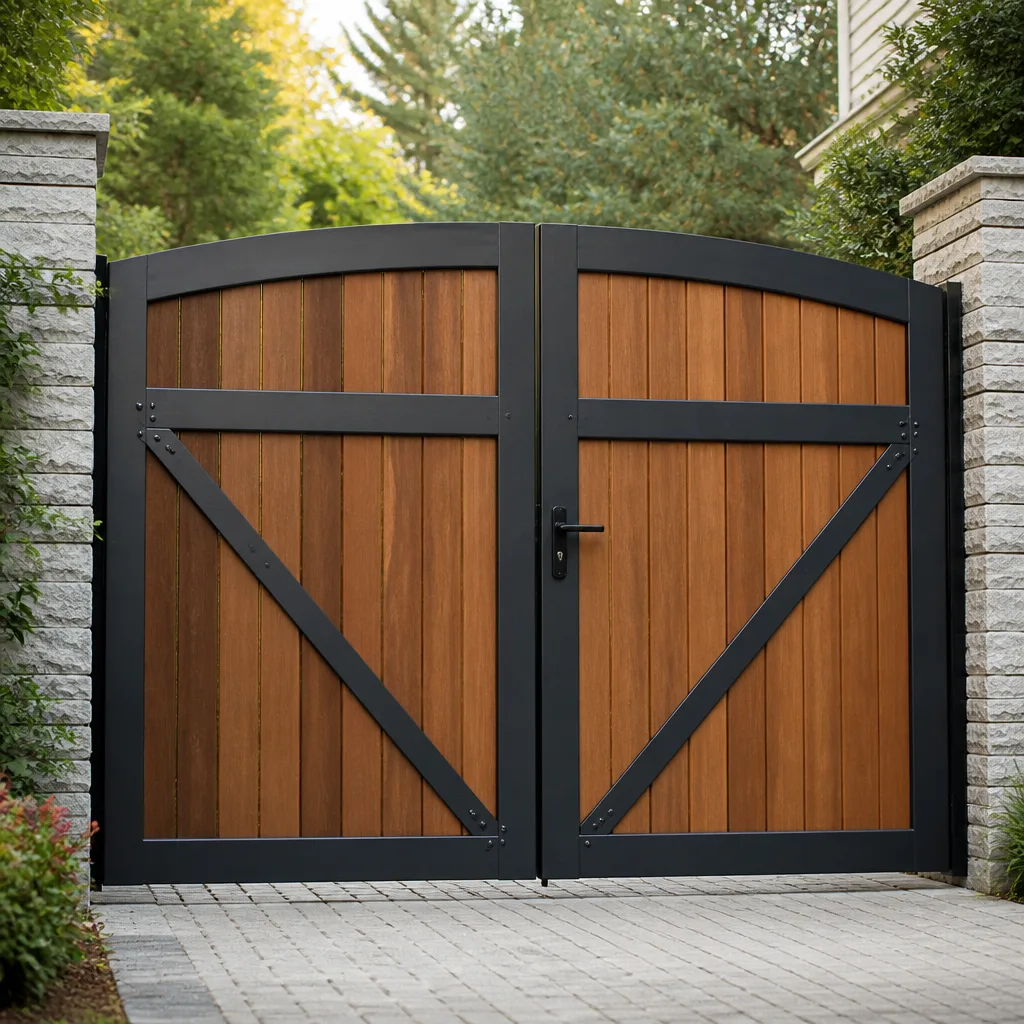 Wood & steel frame
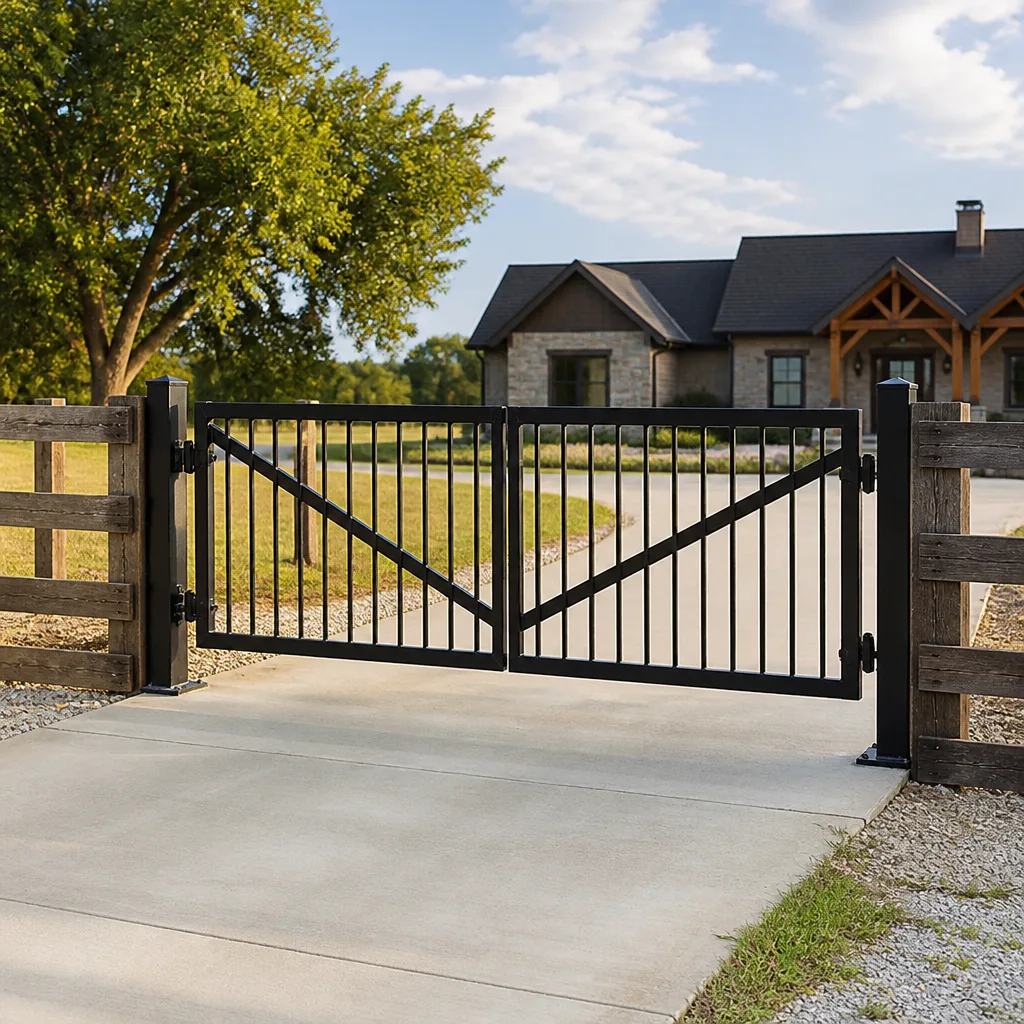 Farm & ranch
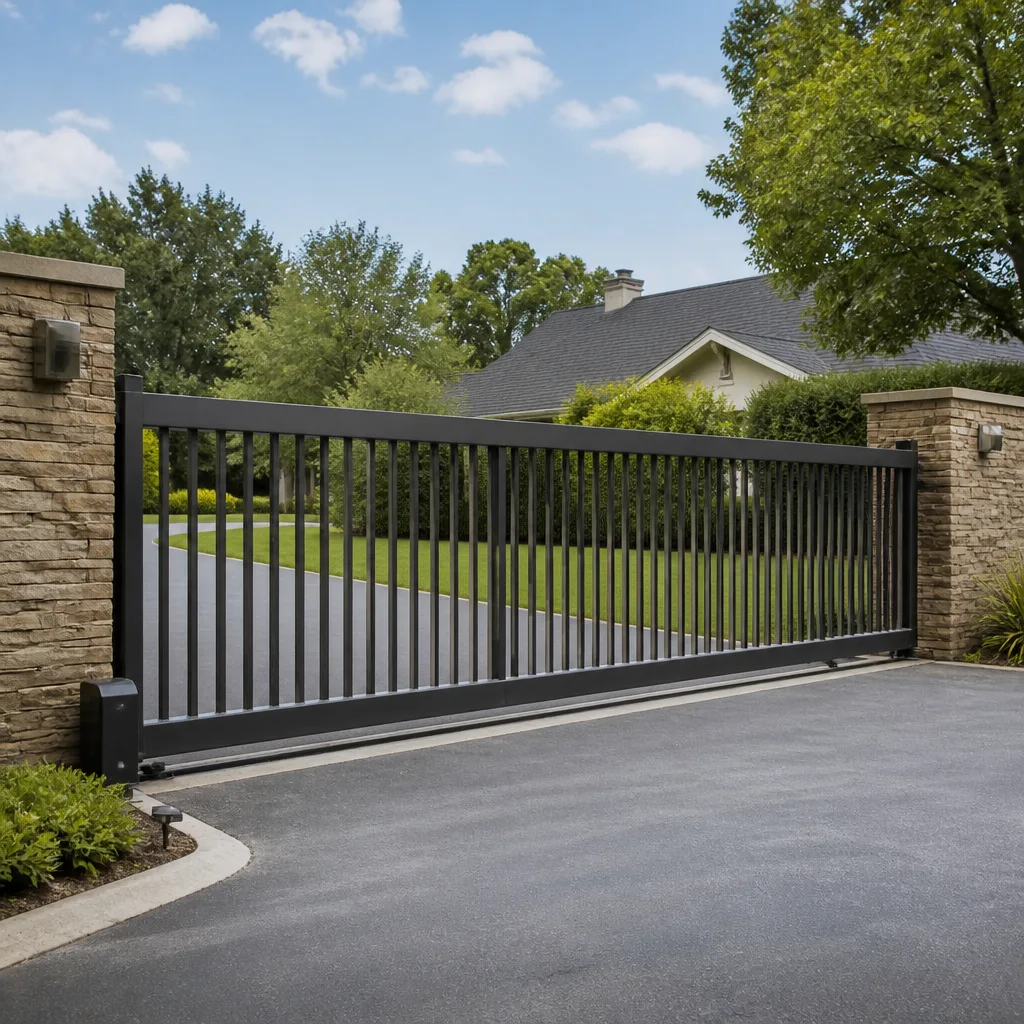 Sliding driveway gates
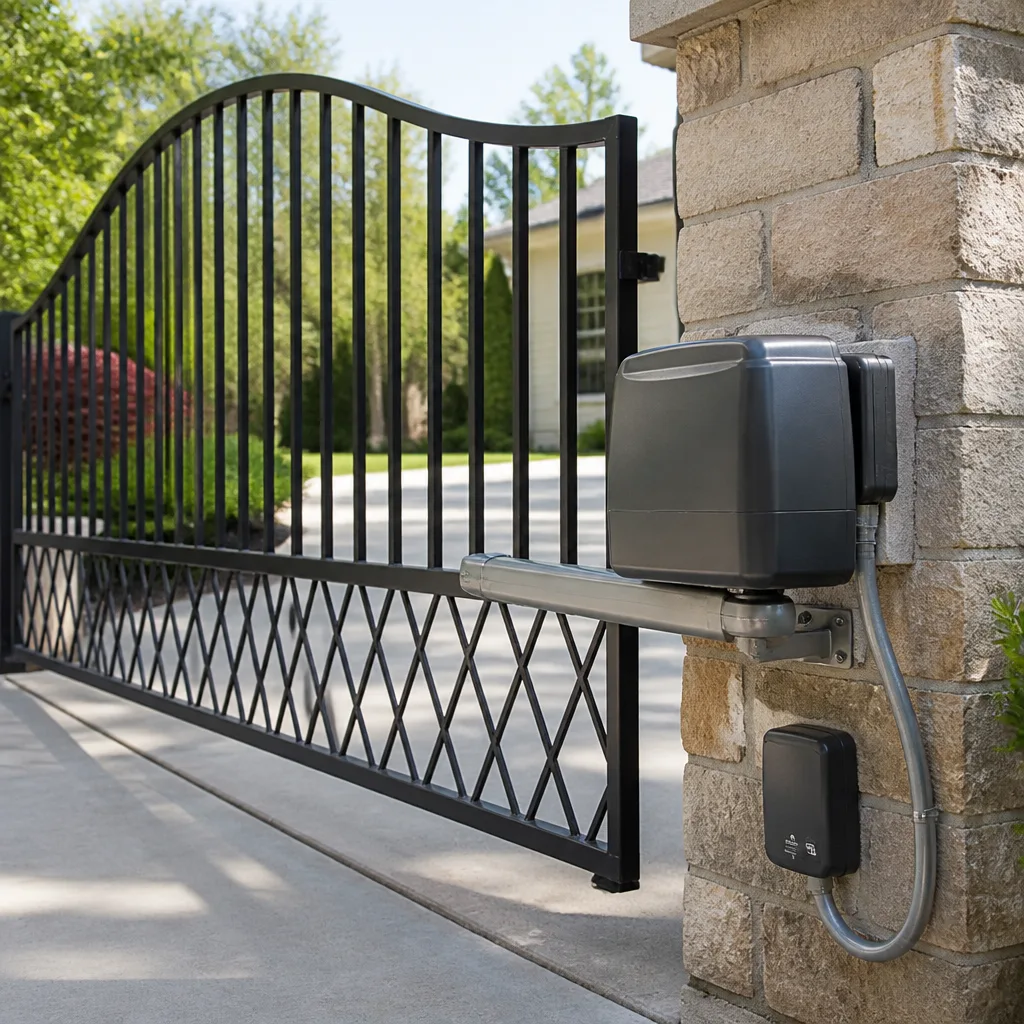 LiftMaster operators
Free on-site gate assessment - hinges, posts, and your LiftMaster or Nice gate operator checked before anything is quoted
The assessment is free and the quote is the invoice.
Get your free estimateGate Repair Maintenance Checklist for Fort Worth Homeowners
Most gate maintenance checklists tell you to “lubricate moving parts twice a year.” In Fort Worth, where summer temps routinely hit 105°F, petroleum-based lubricants applied in June can gum into a paste by August, making that advice actively harmful. This guide replaces generic national templates with a maintenance protocol built around the two realities that actually kill gates in Fort Worth: UV degradation from relentless summer sun and soil heave from Trinity clay that shifts with every wet-dry cycle. You’ll learn which specific products hold up above 100°F, how to inspect for UV-cracked wiring before it fails, and the month-by-month task grid matched to Fort Worth’s actual weather calendar.
Styles & brands we work with
Quick Answer
A Fort Worth gate maintenance checklist should prioritize monthly hinge and post inspections during spring and fall (Trinity clay shift seasons), use synthetic or silicone-based lubricants rated above 100°F instead of petroleum products, and include a quarterly inspection of wiring insulation for UV cracking. Most homeowners can handle visual inspections and lubrication themselves, but opener circuit boards, safety sensors, and any spring under tension should be checked by a professional at least once a year before the summer heat arrives.
Table of Contents
- The Two Gate Killers Specific to Fort Worth
- Lubricants That Survive a Fort Worth Summer (and Ones That Don’t)
- Post and Hinge Inspection for Trinity Clay Soil Shift
- Spotting UV-Cracked Wiring Before It Causes a Failure
- Brand-Specific Opener Checks: BFT, Linear, and Ghost Controls
- Month-by-Month Fort Worth Maintenance Grid
- Common Mistakes to Avoid
- When to Call a Professional
- Frequently Asked Questions
- The Bottom Line
The Two Gate Killers Specific to Fort Worth
Every region has its own gate problems. Coastal cities fight salt corrosion. Northern cities fight freeze-thaw cycles that crack concrete. Fort Worth has two distinct killers that work together in a way most national checklists never address.
The first is ultraviolet radiation. Fort Worth averages 229 sunny days per year, and from June through September, that sun beats down with an intensity that breaks down plastic, rubber, and wiring insulation faster than almost anywhere else in the country. A plastic gear that might last eight years in Seattle can crumble in four years here. Wire insulation that stays flexible in Ohio turns brittle and cracks in a single Fort Worth summer if it’s exposed to direct sun.
The second is Trinity clay. The soil under most of Fort Worth is expansive clay that swells when wet and shrinks when dry. A single heavy spring rain can add hundreds of pounds of lateral pressure against a gate post set in concrete. When the clay dries out in August, that pressure releases. The result is posts that slowly lean, hinges that bind, and gates that suddenly won’t latch because the geometry shifted by half an inch.
These two forces compound each other. A post that shifts during a wet spring creates a misalignment. A misaligned gate puts extra stress on the opener motor. An overworked motor runs hot. And in a Fort Worth August, hot means 140°F inside the opener housing. That’s when circuit boards fail, capacitors bulge, and safety sensors start throwing false errors.
Lubricants That Survive a Fort Worth Summer (and Ones That Don’t)
The single most common piece of gate maintenance advice we see online is wrong for Fort Worth. “Apply a light machine oil or penetrating oil to hinges and rollers twice a year” sounds reasonable until you understand what happens to petroleum-based products at 100°F plus direct sun.
Petroleum-based lubricants have a relatively low flash point and tend to thin out or evaporate in sustained heat. WD-40, for example, is a solvent that cleans and displaces moisture but leaves almost no protective film. In a Fort Worth summer, it evaporates within days. Worse, many petroleum greases oxidize when exposed to high heat and UV, turning thick and gummy. That gummed paste collects dust and grit, which means the exact parts you were trying to protect now grind against an abrasive slurry.
What actually works in Fort Worth:
- Silicone-based lubricants for hinges, latch mechanisms, and any plastic-on-metal contact points. Silicone stays stable from below freezing up to about 400°F, doesn’t attract dust, and won’t degrade rubber or plastic bushings. We recommend brands like 3M Silicone Paste or CRC Heavy Duty Silicone.
- Synthetic PTFE (Teflon) lubricants for sliding gate rollers and tracks. DuPont Teflon Silicone Lubricant and WD-40 Specialist line (the white PTFE version, not the original blue can) both hold up in direct sun and won’t turn gummy.
- White lithium grease in a spray for metal-on-metal contact points like the hinge pins on swing gates, but only in shaded or enclosed areas. In direct sun, even white lithium can break down. Apply it in October and March, not June.
- Dry graphite for lock cylinders and keypads. Never use a wet lubricant in a keypad or lock, especially in dusty conditions. Fort Worth’s dry summer wind will blow fine dust into any wet lubricant and turn it into paste.
What to avoid entirely:
- WD-40 original formula as a lubricant (it’s a solvent, not a lubricant)
- Any petroleum-based grease rated below 200°F
- Motor oil or 3-in-1 household oil on any outdoor gate component
- Any spray lubricant marketed as “penetrating oil” for routine hinge maintenance
One more Fort Worth-specific note: if your gate runs along a gravel driveway or unpaved alley, you’ll need to lubricate more often, not less. The same dry wind that makes Fort Worth summers tolerable carries fine limestone dust that sticks to wet lubricant and accelerates wear. In those conditions, wipe down rollers and tracks with a dry rag before every lubrication, not after.
Post and Hinge Inspection for Trinity Clay Soil Shift
Most gate maintenance checklists treat the gate itself as the thing that breaks. In our experience working on gates across Fort Worth, the gate is usually the victim. The post is the problem.
Trinity clay expands and contracts with moisture. Spring rains saturate the soil, and the clay swells. That swelling pushes against the concrete footing that anchors your gate post. If the footing wasn’t poured deep enough or wide enough, the post shifts. Then the dry months of July and August pull the moisture out, the clay shrinks, and the post shifts the other direction. After two or three years of this cycle, you have a gate that’s a quarter-inch out of square, and every component is fighting that misalignment.
Here’s the inspection protocol we recommend for Fort Worth homeowners, timed to the two critical transition periods: March through April (spring rain saturation) and September through October (summer dry-out).
- Check the gap between the gate and the post. Walk the full length of the gate and look at the gap between the moving gate and the stationary post. It should be consistent. If it’s tight at the bottom and wide at the top, or vice versa, the post has shifted.
- Check the hinges for movement. Open the gate halfway and lift up on the end. There should be zero vertical play. Any movement at all means either worn hinge bushings or loose mounting bolts. Both are cheap to fix now and expensive to fix after a post shift turns them into a full hinge replacement.
- Look for new cracks in the concrete around the post. Hairline cracks that appear in the concrete footing between March and May are the earliest warning sign of soil pressure. They’re easy to miss and almost always mean the post is being pushed.
- Check the latch alignment. Close the gate and watch the latch engage. If the latch now hits the striker plate slightly high, low, or off to one side, something has moved. Don’t adjust the latch to compensate. That treats the symptom and lets the post keep shifting until the gate won’t close at all.
- Check the ground clearance. Walk along the bottom edge of the gate with a measuring tape. The clearance should be consistent along the entire length. If it’s dragging at one end and clear at the other, the gate is sagging.
If you catch a post shift early, the fix is often just tightening bolts and re-shimming the hinges. If you let it go, the shift compounds until the opener motor is fighting a misaligned load every single cycle. That’s how a $150 hinge repair becomes a $900 opener replacement.
For a deeper look at the repair side of this problem, our Gate Repair in Fort Worth page covers what we check on every service call, including post and footing inspections.
Spotting UV-Cracked Wiring Before It Causes a Failure
The wiring on your gate opener does two jobs. It carries low-voltage signals to the safety sensors and keypads, and it carries line voltage from the breaker to the motor. Both are vulnerable to the same Fort Worth summer sun that fades your fence and cracks your dashboard.
Most gate opener manufacturers run wiring through PVC conduit or flexible plastic loom. That’s the intended protection. But conduit connections get brittle, loom gets pulled loose, and any section of wire that gets exposed to direct sun starts degrading immediately. The outer insulation jacket, typically PVC or polyethylene, breaks down under sustained UV exposure. First it fades. Then it gets stiff. Then it develops hairline cracks you can see if you bend the wire slightly.
What makes this dangerous is that UV-cracked insulation doesn’t usually fail immediately. The cracks widen slowly. Moisture from Fort Worth’s spring rains seeps in. Then corrosion starts on the copper conductor. By the time the wire actually fails, you have a combination of degraded insulation, corroded copper, and a short or ground fault that can trip the breaker, damage the opener circuit board, or create a fire risk at the connection point.
Here’s what to look for, and when:
- Walk the full wiring run in April and October. Trace every wire from the opener box to the keypad, sensors, and lock. Look for any section where the conduit has pulled loose or the wire is exposed to direct sunlight.
- Bend test small sections. If the wire is flexible, the insulation is still intact. If it feels stiff and you hear or see cracking when you bend it slightly, the insulation is degraded. Don’t bend hard enough to break it. You want to test flexibility, not destroy the wire.
- Look for discoloration. Healthy insulation has a uniform color. UV-damaged insulation fades unevenly, often turning chalky white or developing a mottled appearance before cracks appear.
- Check the connection points. The most likely failure points are where wires enter the opener housing and where they exit the ground to connect to sensors. These transition points get the most sun exposure and the most physical stress.
If you find degraded wiring, don’t wrap it in electrical tape and call it fixed. Tape provides zero UV protection and the insulation underneath keeps degrading. The proper fix is replacing the affected wire run with UV-rated wire, or repositioning the conduit so the wire is protected. On electric gates specifically, this matters even more because the system operates at higher current. Our Electric Gate Repair in Fort Worth page explains what’s involved in rewiring and when partial replacement is practical versus a full wiring loom replacement.
Brand-Specific Opener Checks: BFT, Linear, and Ghost Controls
Every gate opener brand has its own weaknesses. The same maintenance checklist applied blindly to every opener will miss the specific problem that’s most likely to take your model down in Fort Worth’s climate. Here are the checks that matter for three of the most common brands we see in this market.
BFT Openers
BFT builds solid hydraulic and electromechanical openers that are popular on heavier swing gates. The known weakness in Fort Worth conditions is the capacitor. BFT openers use start capacitors that are sensitive to heat, and sustained 100°F summer days accelerate capacitor aging. A failing capacitor often shows up first as a motor that hums but doesn’t turn, or a gate that opens slowly and then gets progressively slower over a few weeks. If you notice your BFT opener getting sluggish in August, that’s not your imagination. It’s the component telling you it’s on the way out. A capacitor is a cheap part. A burned-out motor from repeated failed starts is not.
Linear Openers
Linear, particularly the LDO series used on many residential slide gates, has a known quirk with the limit switch mechanism. The limit switch is the small sensor that tells the gate when to stop opening and when to stop closing. On Linear units, the limit cams are plastic and they sit inside the opener housing where dust can accumulate. Fort Worth’s dry, dusty wind works fine particles into the housing, and over time those particles coat the limit cams. The result is a gate that stops a few inches short of fully open, or reverses before it’s fully closed. The fix is removing accumulated dust from the limit cam area with compressed air, not just spraying more lubricant. If you’re comfortable opening the housing, blow it out with compressed air every six months. If you’re not, have a professional do it during a routine opener check.
Ghost Controls Openers
Ghost Controls makes battery-powered openers that are popular on remote properties and ranches around Fort Worth where running line voltage to the gate is impractical. The specific weakness here is the battery terminals and solar panel connection points. Fort Worth’s temperature swings cause expansion and contraction at the battery connections, and corrosion builds up on the terminals faster than it would in a more stable climate. Check the battery terminals every three months for white or green corrosion. Clean with a wire brush and apply dielectric grease to the terminals. If you’re running the solar panel, wipe the panel surface clean every month during pollen season and every two weeks during the dry dusty months of July and August. A dirty solar panel in Fort Worth dust conditions can lose 30 percent or more of its charging efficiency, which means the battery runs down and the gate stops opening.
Whatever brand you own, a professional inspection that knows the specific failure points is worth more than any generic checklist. If you’re not sure what opener you have, our Gate Opener Repair in Fort Worth page covers the most common models in this market and their typical repair costs.
Month-by-Month Fort Worth Maintenance Grid
Forget the four-season model. Fort Worth has five functional seasons: cool and wet (January-February), storm and growth (March-May), hot and dry (June-August), residual heat with scattered storms (September-October), and mild with occasional freezes (November-December). This grid maps maintenance tasks to the actual conditions you’ll experience.
January – February
- Inspect gate hinges for stiffness after any freeze event. Cold weather doesn’t usually damage hinges, but any existing misalignment plus cold metal can cause binding.
- Check the opener battery backup (if equipped). Cold snaps are when backup batteries show their age. Test by cutting power and running the gate one full cycle.
- Clean photoelectric sensor lenses. Winter overcast doesn’t mean the sensors stay clean. Dust still accumulates, and low-angle winter sun can cause false triggers if the lenses are dirty.
March – April
- Perform the full post and hinge inspection detailed in the soil shift section above. This is the critical window. Spring rains saturate the Trinity clay, and post movement is most visible now.
- Check drainage around gate posts. Water pooling at the post base accelerates soil saturation and increases pressure. Clear any debris blocking drainage paths.
- Lubricate hinges and rollers after the last freeze, before the heat arrives. Use the synthetic or silicone products recommended above.
- Inspect wiring insulation for UV damage that developed over winter. Early detection now prevents spring rain from getting into cracked insulation.
May – June
- Apply a fresh coat of sealant or paint to any bare metal on the gate frame. This is the last window before summer UV intensity peaks.
- Test the opener’s automatic reverse function. Put a 2×4 in the gate’s path and run the closing cycle. If it doesn’t reverse, that’s a safety failure that needs immediate attention.
- Check the gate’s ground clearance after spring growth. Grass and ground cover can grow up into the gate path and cause obstructions.
July – August
- Reduce your inspection frequency but increase your attention to heat-related symptoms. Watch for sluggish operation, unusual humming, or opener failure during the hottest part of the day.
- Check opener housing temperature on 100°F days. If the housing feels too hot to hold your hand on, the internal components are running even hotter. Consider adding shade to the opener housing.
- Clean solar panel surfaces every two weeks if you have a battery-powered Ghost Controls or Mighty Mule system. Summer dust plus intense sun equals maximum efficiency loss from dirty panels.
- Do not lubricate with petroleum products. Do not do major mechanical work in the heat. Do not ignore a gate that’s running slowly. Heat failures compound.
September – October
- Perform the second full post and hinge inspection of the year. The summer dry-out is complete, and any shift that happened is now visible.
- Re-lubricate hinges and rollers with synthetic or silicone products. The summer has baked off whatever lubrication you applied in spring.
- Inspect wiring insulation again. A full summer of direct UV exposure is what pushes marginal insulation into cracked, failing insulation.
- Check the opener battery condition. Summer heat is harder on batteries than winter cold. Load test the battery if you haven’t already.
November – December
- Test keypad and remote operation as temperatures drop. Some keypads with older-style membrane buttons get less responsive in cold weather.
- Clear leaves and debris from slide gate tracks. Wet leaves packed into a track can cause a slide gate to bind when temperatures freeze.
- Check for any loose bolts on the gate hardware. The full seasonal cycle of expansion and contraction has worked through every connection. Snug up anything that’s worked loose.
Common Mistakes to Avoid
- Using petroleum-based lubricants in summer. Applied in June, these break down by August and turn into an abrasive paste. Fort Worth heat turns what works in other climates into a problem here.
- Ignoring a post shift and adjusting the latch instead. When the gate won’t latch, the solution is fixing the alignment, not moving the striker plate. Adjusting the latch to match a leaning post just lets the post keep moving until the failure is structural.
- Spraying lubricant into the opener housing. The circuit board and limit switches don’t need lubrication, and overspray inside the housing attracts dust that causes exactly the limit switch problems we described with Linear openers.
- Wrapping UV-cracked wire with electrical tape. Tape doesn’t stop UV damage. The insulation keeps degrading underneath, and the tape fails in a single summer. You’ve bought a few months, not solved the problem.
- Only checking the gate when it stops working. The whole point of maintenance is catching a $80 hinge bushing before it becomes a $900 opener replacement. Waiting for failure means paying for the expensive version of every problem.
- Assuming a “universal” national checklist applies to Fort Worth. A checklist written in Ohio doesn’t account for Trinity clay or 105°F summers. The timing and the products matter as much as the tasks themselves.
- Ignoring battery maintenance on openers with backup power. A backup battery that’s never tested is a backup that fails exactly when you need it most, which in Fort Worth is usually during a spring storm that takes out power and leaves your gate stuck closed.
When to Call a Professional
Some maintenance tasks are safely DIY. Others are not. The line is wherever you find springs under tension, line voltage wiring, or circuit boards. Garage and gate springs store enormous energy, and an uncontrolled release can cause serious injury. Gate openers handle line voltage, and a mistake can mean fire or electrocution. Circuit boards are sensitive to static discharge, and even a careful amateur can destroy a $300 board with one wrong probe placement.
Call a professional when you see any of these: a post that’s shifted more than a quarter inch, a spring that’s broken or shows signs of fatigue, a gate that’s too heavy to move by hand, an opener that trips breakers or makes grinding noises, or wiring with exposed copper. These are safety failures and structural problems, not routine maintenance. Calder Gate Repair offers free estimates in Fort Worth. Call us at (682) 432-9830 and we’ll tell you what’s actually wrong and what it costs to fix, in writing, before anything starts.
Frequently Asked Questions
Twice a year works for most gates: once in March or April after the last freeze, and once in September or October after the summer heat has passed. Use a synthetic or silicone-based lubricant, never petroleum-based products, which break down in sustained 100°F-plus conditions. If your gate runs along a gravel driveway or unpaved alley, add a third lubrication in June with a dry film lubricant, since Fort Worth’s dusty summer wind works grit into every wet surface. Call (682) 432-9830 if you’re not sure which product applies to your specific gate.
Most professional gate maintenance visits in Fort Worth run $85 to $150 for a visual inspection plus lubrication and minor adjustments. If the inspection finds worn parts, hinge bushings typically cost $40 to $80 per hinge to replace, and a full opener tune-up with limit switch and capacitor testing usually falls between $150 and $250 including the service call. Calder Gate Repair provides a written price before any work starts, so the number on the invoice matches the number you agreed to at the door.
Post shift from Trinity clay soil movement is the most common underlying problem, even when the visible symptom is something else entirely. A gate that won’t latch, an opener that grinds, or a hinge that squeaks is often the result of a post that moved a quarter-inch during a wet spring or dry summer. The visible problem is a symptom; the post movement is the disease. Catching post shift early usually costs under $200. Letting it compound can mean a $900 to $1,500 opener replacement.
You can handle visual inspections, lubrication, cleaning sensor lenses, and testing the reverse function. You should not handle springs under tension, line voltage wiring, circuit board diagnostics, or any repair involving a shifted post. Those require equipment, training, and experience to handle safely. Springs in particular store enough energy to cause serious injury if they release unexpectedly. If you’re not sure, call us at (682) 432-9830 and we’ll tell you honestly whether it’s a DIY job or a professional call.
August is when heat stress peaks in Fort Worth. The opener motor runs hottest, the capacitor is under maximum thermal load, and the circuit board components age faster with every degree above their rated temperature. An opener that’s been marginal all year will fail in August because that’s when every component is simultaneously stressed. Most gate opener repairs in Fort Worth cluster in late July, August, and early September. If your opener is showing signs of weakness, address it before the heat peak, not during it.
We’re factory-familiar with nine major gate opener brands: LiftMaster, FAAC, BFT, Linear, Viking, Ghost Controls, DoorKing, Elite, and Mighty Mule. That covers virtually every opener a Fort Worth homeowner is likely to own, whether it’s a residential slide gate in Tanglewood, a ranch gate in Aledo, or a commercial opener on a property near downtown. Each brand has its own failure patterns, and we’ve seen enough of each to diagnose accurately rather than guessing. Estimates are free. Call (682) 432-9830 for a written quote.
The Bottom Line
A Fort Worth gate maintenance checklist only works if it accounts for what actually happens in Fort Worth: UV radiation that destroys plastic and insulation faster than national averages, Trinity clay that shifts posts with every seasonal moisture cycle, and summer heat that stresses every mechanical and electrical component in your opener. The tasks themselves are straightforward: inspect posts and hinges twice a year, use heat-stable synthetic or silicone lubricants, check wiring insulation for UV cracking each spring and fall, and know the specific failure points of your opener brand. Most homeowners can handle the visual inspection and lubrication. The rest is a phone call. Calder Gate Repair Fort Worth gives you a written price before any work starts, and every repair is backed by the 365-Day Done Right Promise: if it fails within a year, we come back at no charge. Call (682) 432-9830 for a free estimate.
Written by Nico Alvarez, Owner at Calder Gate Repair Fort Worth, serving Fort Worth since 2009.
See the difference
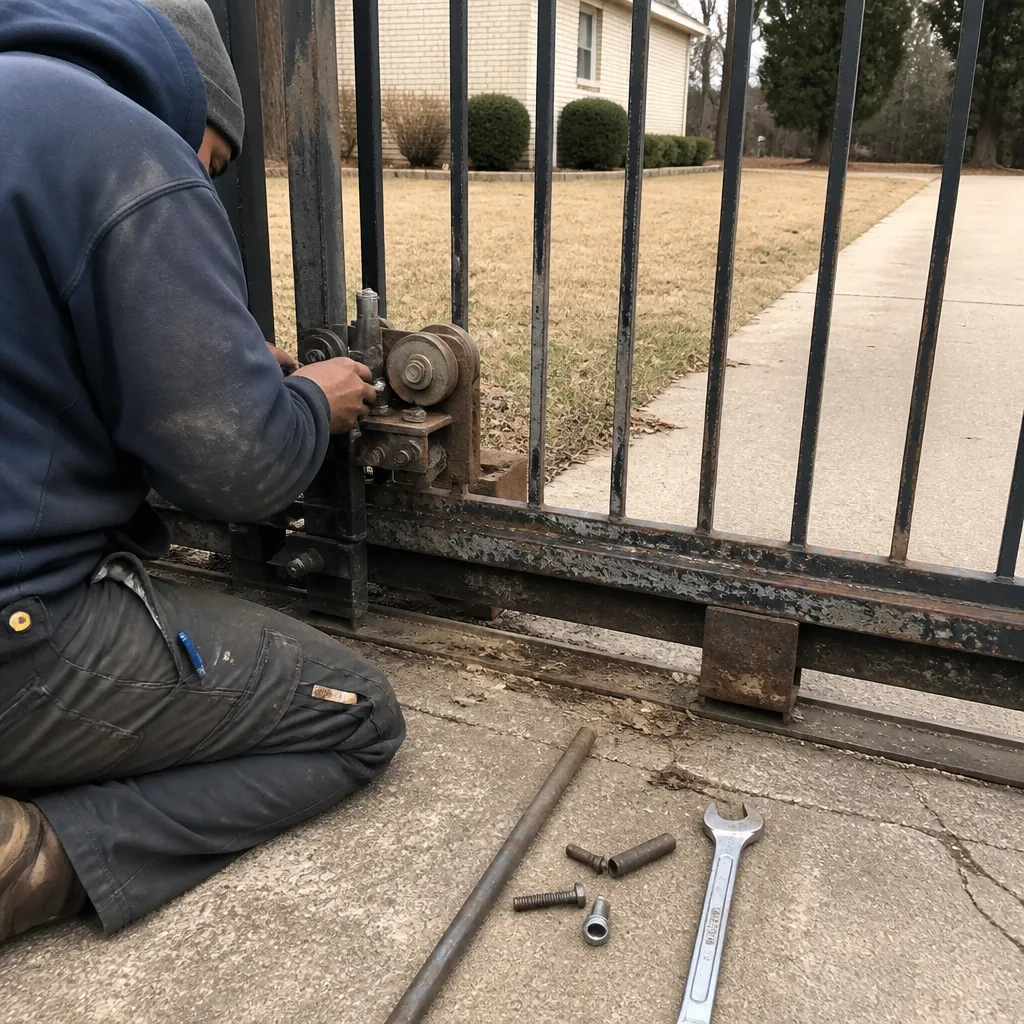 Before
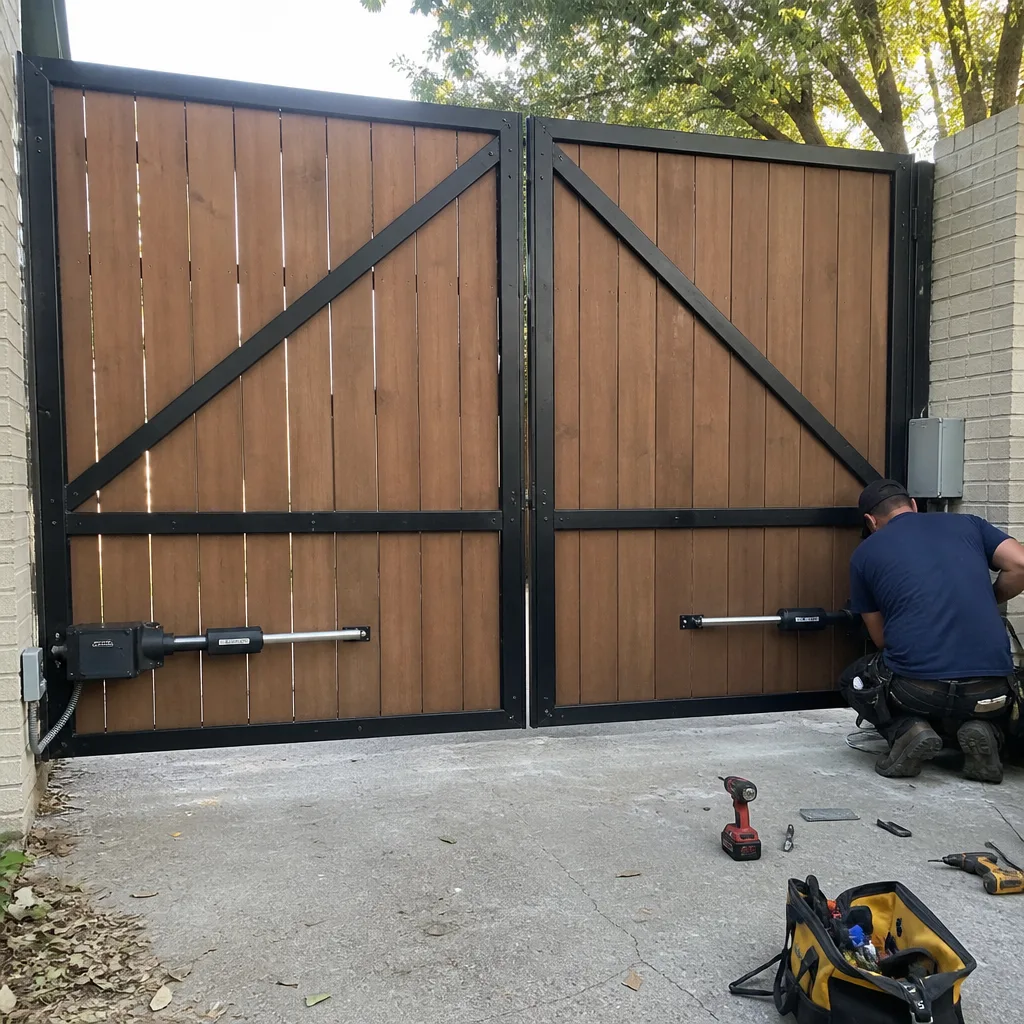 After
After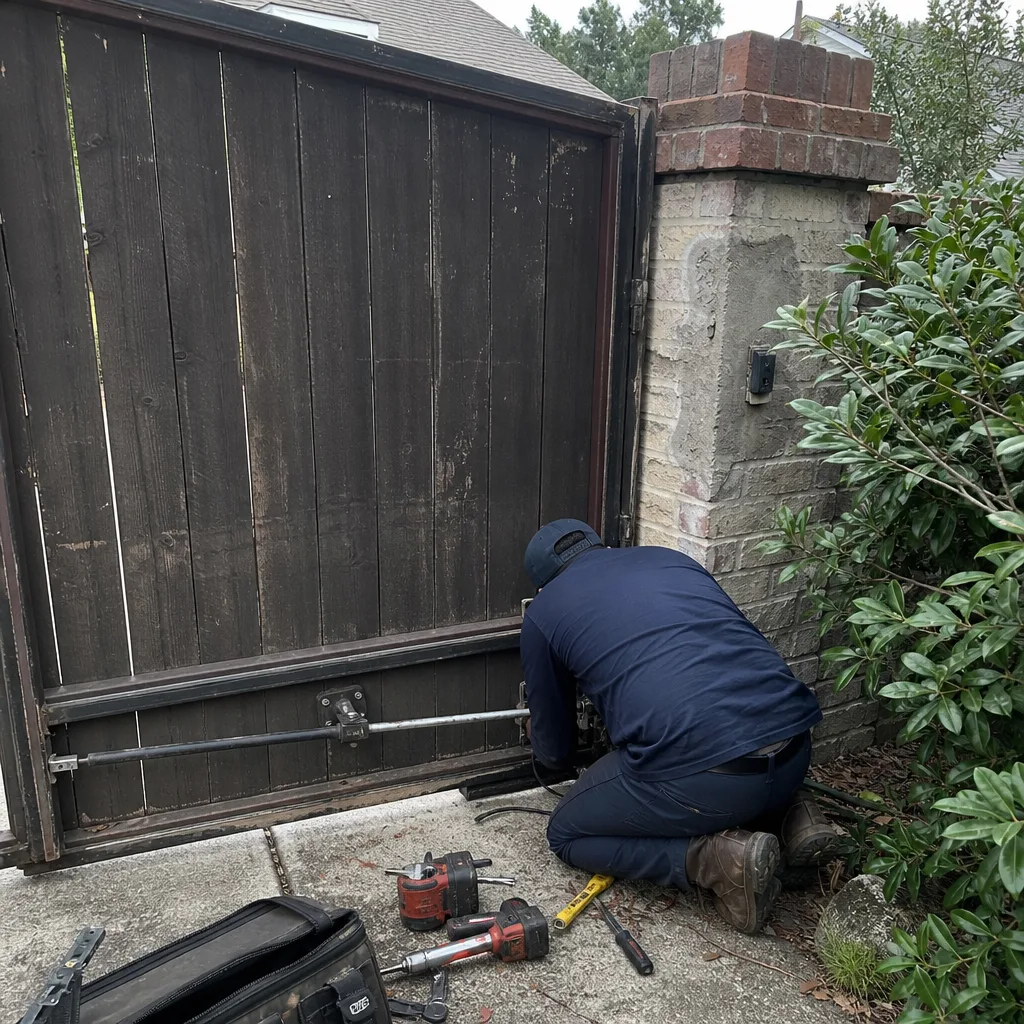 Before
 After
After Before
 After
After