
Last updated October 16, 2026
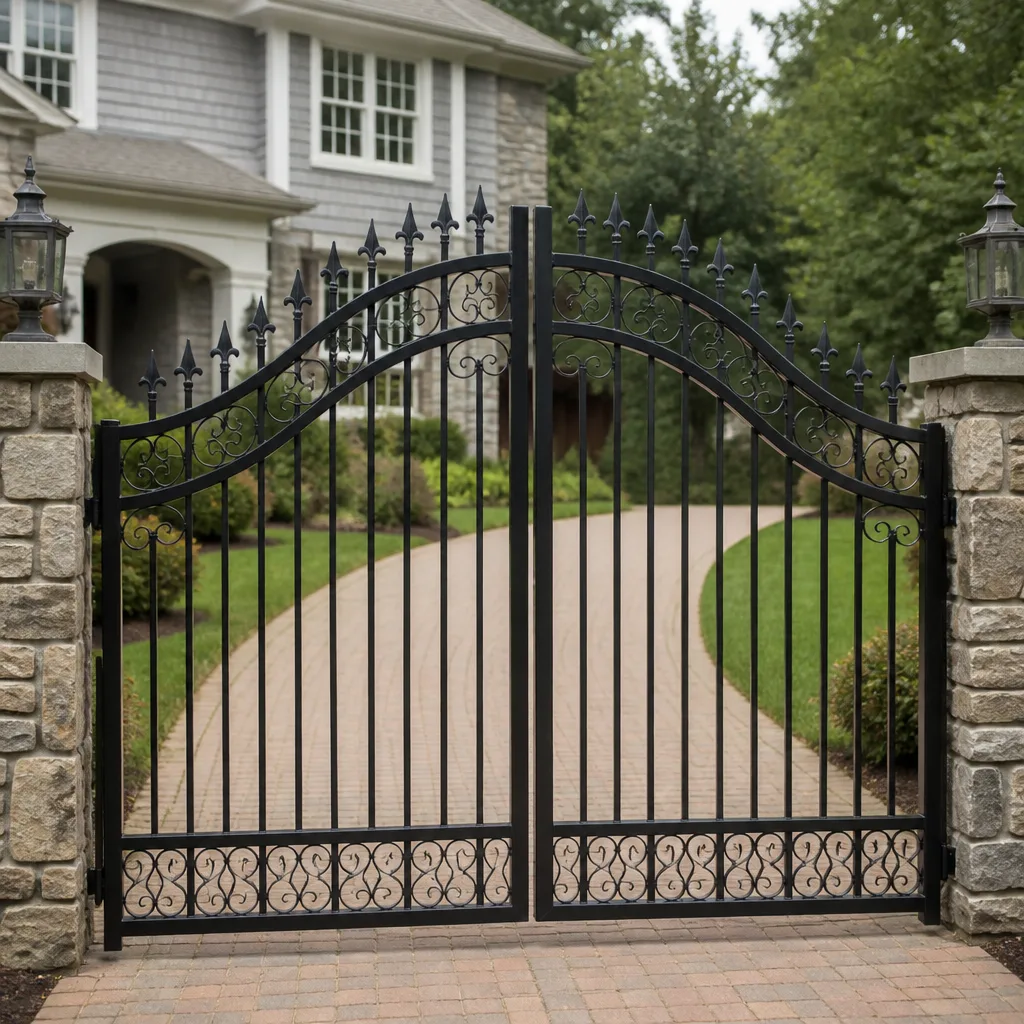 Wrought iron
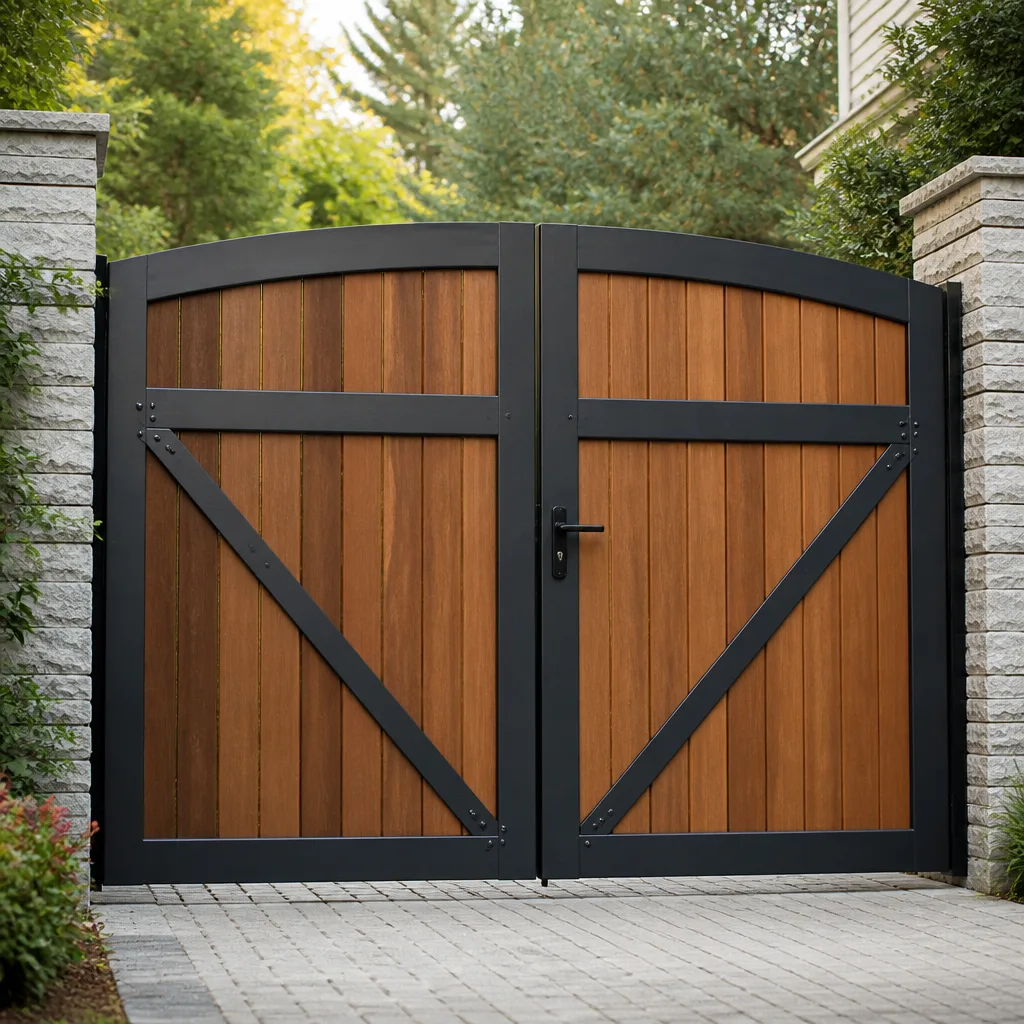 Wood & steel frame
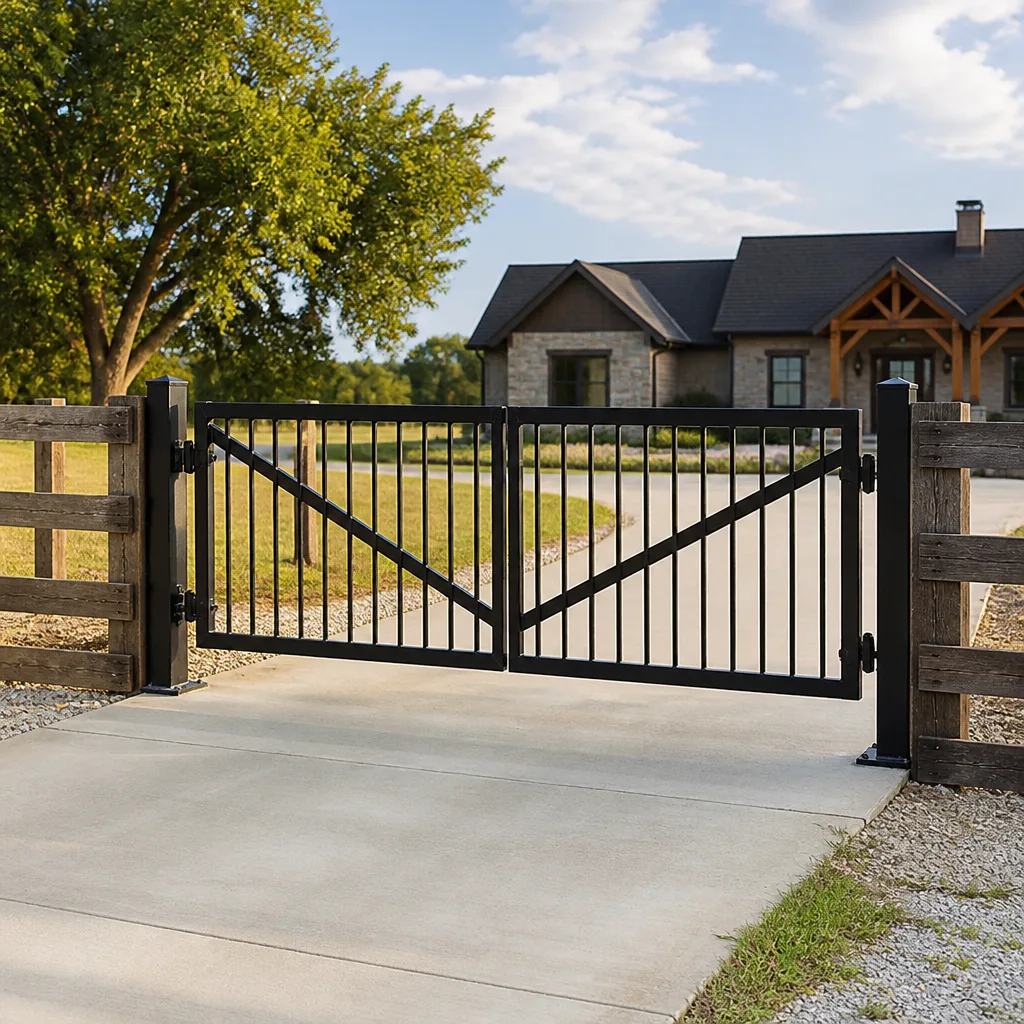 Farm & ranch
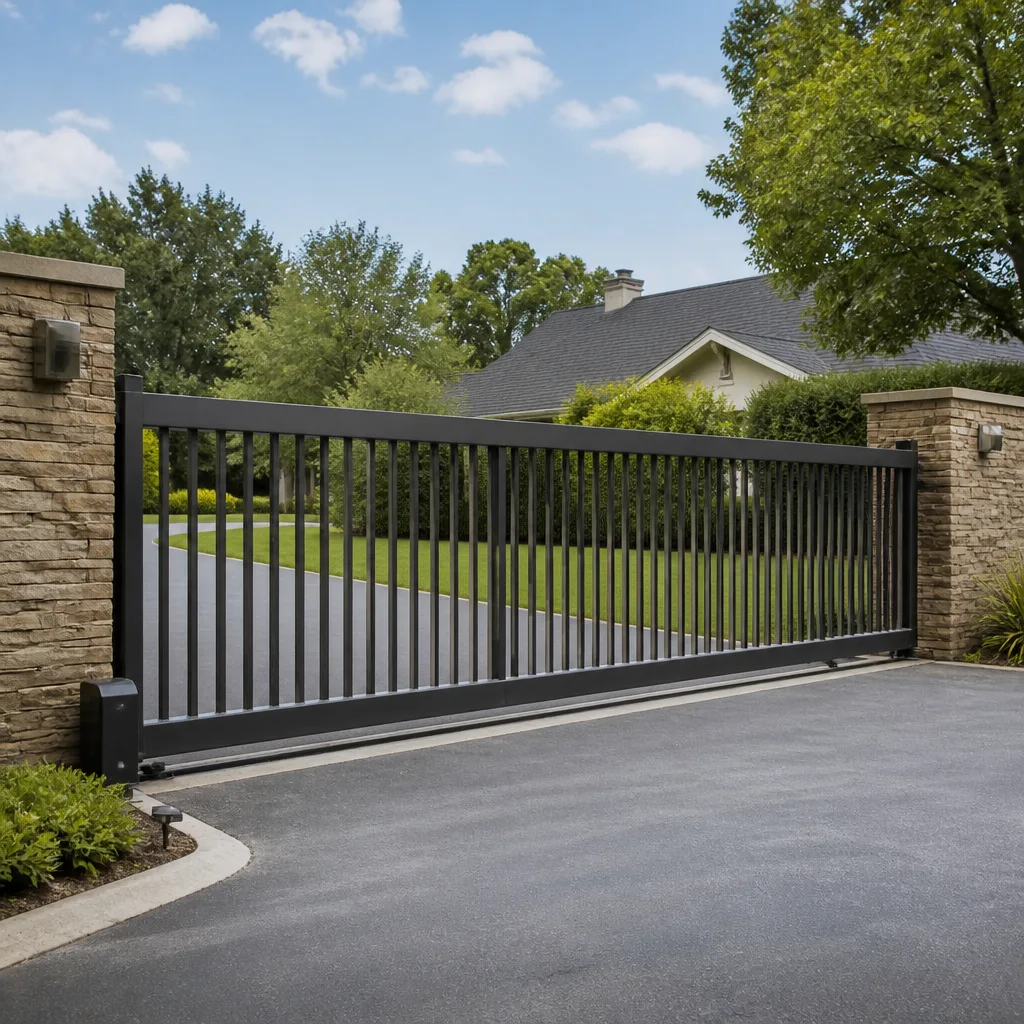 Sliding driveway gates
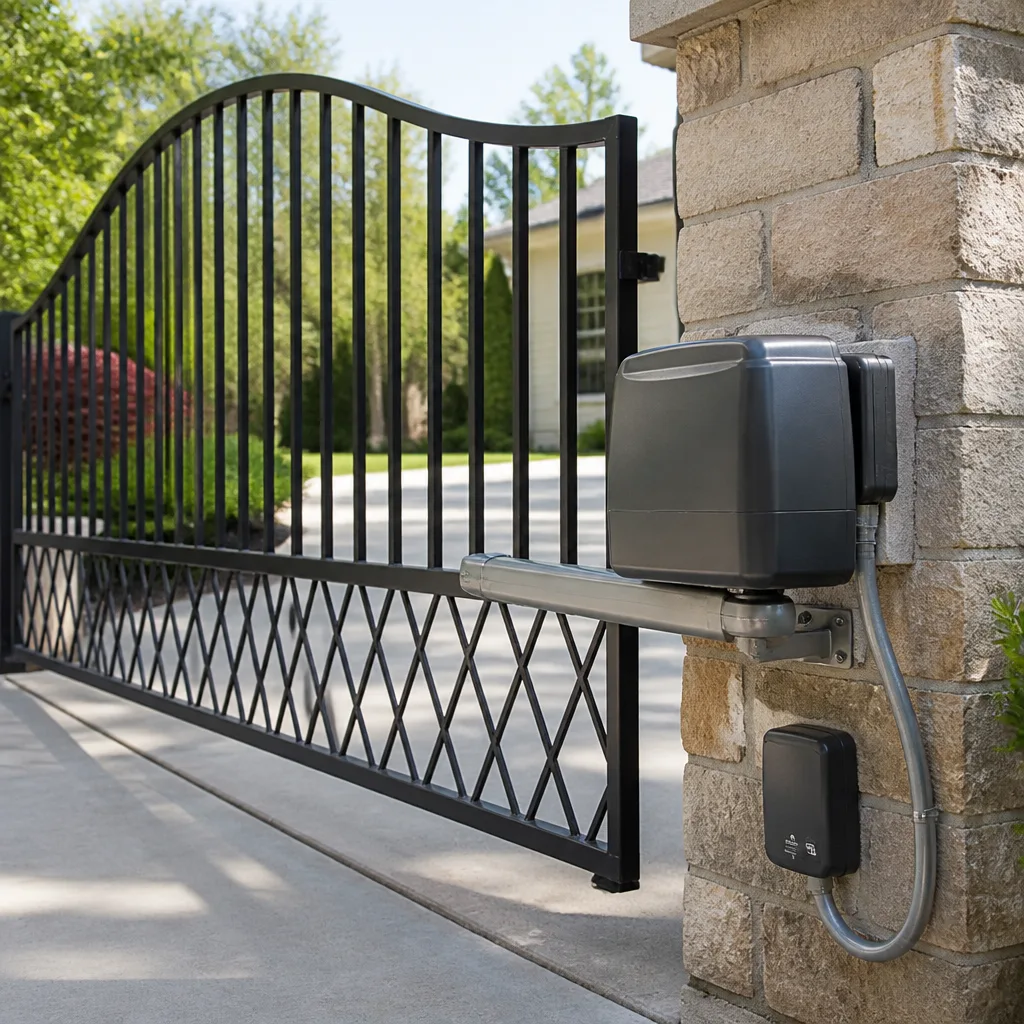 LiftMaster operators
Free on-site gate assessment - hinges, posts, and your LiftMaster or Nice gate operator checked before anything is quoted
The assessment is free and the quote is the invoice.
Get your free estimateGate Repair Warning Signs: A Fort Worth Homeowner’s Reference Guide
Here’s something most Fort Worth homeowners don’t realize until it’s too late: your gate has been telling you it’s failing for weeks, sometimes months, before it finally quits. The hesitation before it opens. The grinding sound that wasn’t there last spring. The remote that works only when you’re standing ten feet away instead of forty. None of these are quirks. They’re diagnostic clues, and each one maps to a specific, fixable problem that costs a fraction of what the eventual failure will. By the time a gate stops moving entirely, the repair bill has usually tripled. This guide decodes those early warnings so you can act while the fix is still cheap.
Quick Answer
The most common gate repair warning signs in Fort Worth are slow response time (a gate that hesitates before moving), grinding or scraping sounds during operation, a gate that reverses mid-cycle, erratic remote range, and visible sagging or rust at the hinges. If you’re noticing any of these, our Gate Repair services can help catch problems early. Any one of these means a component is degrading. Most early-stage repairs run $80 to $150 in labor; ignoring them typically leads to motor or board failure costing $600 or more. If your gate hesitates before moving, makes new sounds, or reverses unexpectedly, schedule an inspection before operating it again.
Styles & brands we work with
Table of Contents
- The Sound Decoder: What Your Gate Is Telling You
- The Hesitation Warning: Fort Worth’s Most Overlooked Symptom
- Reversing Mid-Cycle: Sensor Warning or Wiring Warning?
- Remote Behavior Changes That Precede Failure
- Visual Warnings You Can Spot From the Driveway
- Four Homeowner Diagnostics That Take Under Five Minutes
- The Stop-and-Call Threshold: When Not to Operate Your Gate
- Why Fort Worth’s Climate Accelerates Gate Wear
The Sound Decoder: What Your Gate Is Telling You
Gates are quieter than garage doors, which is why sound changes are easy to dismiss. In our experience across Fort Worth neighborhoods from Wedgwood to Saginaw, the same three sounds account for roughly seventy percent of the service calls where a homeowner says “it’s been making that noise for a while.” Here’s what each one means.
Grinding or metal-on-metal scraping points to the gate’s rolling hardware: the wheels, track, or hinge bearings. Fort Worth’s clay-heavy soil shifts with rain and drought cycles, which gradually knocks gates out of square. When a gate is even slightly misaligned, the wheel drags against the track or the leaf scrapes the post. The fix is often a track adjustment or wheel replacement, a $120 to $200 job. Left alone, the wheel seizes, and the opener motor strains against a load it was never designed to move. That’s how a $150 fix becomes a $700 motor replacement.
Clicking or rapid chattering from the control box almost always means a relay or capacitor struggling to engage. On a LiftMaster or FAAC opener, this is typically the first audible sign of electrical stress. A failing relay can still complete the circuit, but it does so weakly, with a telltale stutter. If you hear this, the opener is working harder than it should. The repair is usually under $200. The failure it precedes is usually over $600.
A low hum with no movement is the most urgent sound on this list. That hum is the motor receiving power but unable to turn the drive mechanism, which means the motor is running against a locked load. Sometimes it’s a broken drive chain; sometimes a seized gearbox. Either way, continuing to press the remote is cooking the motor windings. Cut power to the opener at the breaker and call for service. This is not a diagnostic you want to leave for the weekend.
Here’s the practical version: if your gate sounds different than it did three months ago, something has changed mechanically or electrically. Neither condition self-corrects. Our technicians can usually identify the source of a new gate sound within the first five minutes of an inspection because each failure mode has a signature.
The Hesitation Warning: Fort Worth’s Most Overlooked Symptom
A gate that pauses for one or two seconds after you press the remote, or after the opener beeps, is not “getting slow with age.” That hesitation is almost always a failing capacitor or a voltage drop across a corroded connection. And in Fort Worth, where summer temperatures routinely push 100 degrees for weeks at a time, capacitor failure is the single most common overlooked warning sign we see.
Here’s the mechanism. The capacitor in your gate opener stores a burst of electrical energy that gives the motor its starting torque. Capacitors degrade with heat exposure, and the control box mounted on a metal post in Texas sun becomes an oven. As the capacitor weakens, the motor can’t start instantly. It waits, trying to build enough charge to turn over. That’s the hesitation you feel as you watch the gate pause before moving. Most homeowners read it as normal aging. It isn’t. It’s a component that’s already failing and taking stress off the motor’s windings with every start cycle.
The fix is straightforward. Capacitor replacement on most residential openers, including the Mighty Mule and Ghost Controls units common in Fort Worth subdivisions, runs $80 to $150 in labor plus a $15 to $40 part. Compare that to the $600 to $900 motor replacement that follows when the capacitor fully fails and the motor stalls under load repeatedly in the heat. The economics are not subtle.
We’ve also seen voltage drop mimic this symptom. A corroded wire nut, a loose terminal, or a splice that’s been exposed to North Texas rain creates resistance. The opener receives current but not enough of it. The motor starts sluggishly. The fix for this is even cheaper than a capacitor: a technician finds the bad connection, cleans or replaces it, and the gate returns to instant operation. The catch is that finding the voltage drop requires a multimeter and an understanding of low-voltage wiring, which is why we don’t recommend tracing it yourself.
The takeaway: hesitation is never normal. If your gate was instant for years and now pauses, that pause is a capacitor or a connection telling you it’s failing. The earlier you act on this specific warning sign, the cheaper the repair, and this holds true across every brand we service from LiftMaster to BFT.
Reversing Mid-Cycle: Sensor Warning or Wiring Warning?
A gate that closes halfway and then reverses back open is sending a specific signal. The question is which system is sending it, and the answer determines whether you’re looking at a $50 fix or a $400 repair. Here’s how to tell the difference without opening a single panel.
Sensor warning signs are consistent. If the gate reverses at the same point every cycle, or only when something is near the gate’s path, the safety sensor is doing its job and detecting something it doesn’t like. On most Fort Worth residential gates, this means one of three things: the sensor eye is dirty, the sensor has shifted out of alignment, or a plant, fence section, or basketball has intruded into the detection zone. A dirty sensor is a five-minute fix with a dry cloth. A misaligned sensor needs a technician to re-aim it, usually a $60 to $100 service call.
Wiring warning signs are inconsistent. If the gate reverses at different points on different cycles, or reverses occasionally with no pattern, the problem is typically in the wiring harness. A conductor inside the insulation has fractured, often along the hinge line where the wiring flexes every time the gate moves. That fracture makes contact sometimes and loses contact other times, depending on temperature and gate position. The gate’s control board reads the intermittent signal as an obstruction and reverses. This is the warning sign to take seriously: intermittent electrical faults rarely stay intermittent forever. Eventually the wire loses contact permanently, and the gate simply refuses to operate.
There’s a third reversal pattern worth knowing: reversal that happens only in hot weather. This is a thermal overload on the motor. The windings heat up, the internal thermal switch trips, and the opener reverses or shuts down mid-cycle. In Fort Worth, this shows up most often in July and August on gates that face west and get baked all afternoon. If your gate reverses on hot days but runs fine in the morning, that’s not a sensor issue. That’s the motor telling you it’s at the edge of its thermal limits, and pushing through the heat will shorten its life considerably.
The practical distinction is simple. A consistent reversal point points to the sensor. An inconsistent reversal pattern points to the wiring. Heat-linked reversal points to the motor. All three are repairable, but the right diagnosis determines whether you’re paying for a cleaning or a wire harness replacement.
Remote Behavior Changes That Precede Failure
Your remote is the most direct interface with your gate, and its behavior changes are early-warning data. Most Fort Worth homeowners treat remote problems as remote problems: swap the battery, maybe buy a new one, and move on. But a remote’s behavior often reveals what’s happening inside the opener, not inside the remote.
Shrinking range is the big one. If your remote used to open the gate from forty feet away and now only works from fifteen, don’t just replace the battery. A weak battery is one possibility, but so is a failing receiver board in the opener. The receiver’s sensitivity degrades with age and heat exposure, and in Fort Worth’s climate, a receiver board mounted in a sun-baked control box ages faster than most manufacturers account for. If a fresh battery doesn’t restore the old range, the receiver is the problem. That’s a $150 to $300 board replacement on most LiftMaster, FAAC, and BFT residential units. If you do replace the board, note that you’ll need to reprogram every remote and keypad, which your repair technician should handle as part of the job.
Intermittent response, where the remote works on the second or third press but not the first, is usually not a remote issue at all. It’s a control board or a limit switch beginning to fail. The limit switch, which is the small sensor that tells the gate when to stop at the open and closed positions, has internal contacts that wear out. When those contacts get marginal, the opener sometimes misreads the gate’s position and ignores the remote’s command. It’s a behavior that comes and goes, which is exactly why it gets ignored until the switch fails completely and the gate sits dead.
Keypad quirks follow a similar pattern. If your exterior keypad works sometimes but not others, or if the gate opens from the keypad but not the remote in the car, the issue is rarely the keypad itself. It’s more often a failing receiver or control board that’s only picking up the stronger signal from the keypad, which is mounted closer to the opener. The same failure that shrinks remote range just manifests differently.
One brand-specific note for Fort Worth. Mighty Mule units are extremely popular in this market because they’re affordable and easy to install, but their receiver boards are more exposed to the elements than premium brands. We see more receiver failures on Mighty Mule openers than on any other brand in our service area. If you own a Mighty Mule and your remote range is fading, a receiver board issue is more likely than a battery issue. Have it checked before you spend money on remotes you don’t need.
Visual Warnings You Can Spot From the Driveway
You don’t need to open the control box to catch most early gate problems. Half of the warning signs we look for on a gate repair in Fort Worth are visible in thirty seconds from standing in front of the gate. Here’s what to look for and what it means.
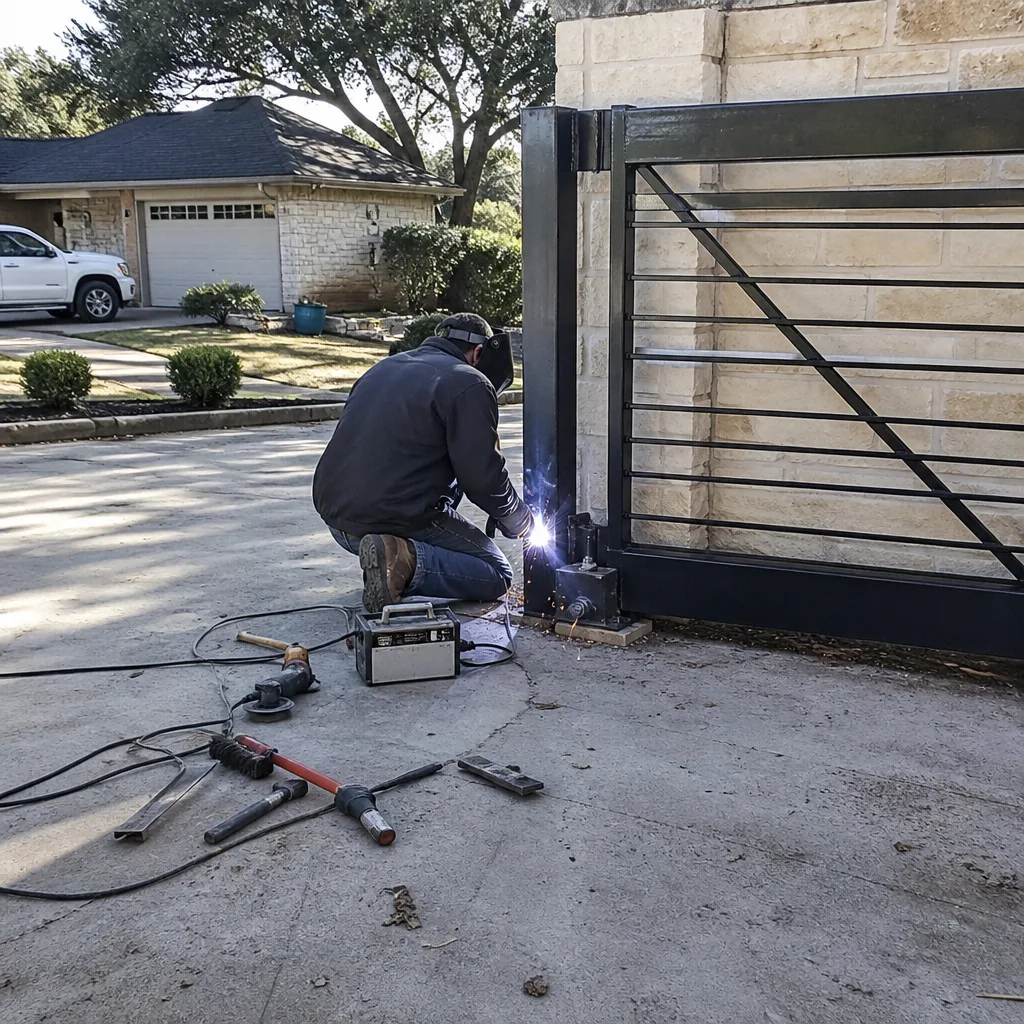
Sagging or a gate leaf that’s lower at the free end than the hinge end is the most common physical warning sign. Over time, hinges wear and posts settle, especially in Fort Worth’s expansive clay soil, which swells when wet and shrinks when dry. A gate that’s sagging even an inch is dragging, and a dragging gate is putting extra load on every component downstream: the wheels, the track, the chain, and ultimately the motor. The fix is hinge replacement or post re-shimming, typically $150 to $350. The consequence of ignoring it is a burned-out opener, typically $500 to $900.
Rust at the welds or hinge points is a structural warning, not a cosmetic one. A gate leaf is a large, heavy surface, and when wind loads hit it, the force concentrates at the joints. Rust weakens those joints incrementally. A gate that breaks at a rusted weld point doesn’t just sag. It falls, and a falling gate is a safety hazard for anyone nearby. If you see rust bloom at hinge points or weld joints, have the gate assessed before the rust advances from surface to structural.
The “paper test” for sensor alignment. Here’s a simple visual diagnostic: place a piece of paper in the path of the safety sensor beam while the gate is closed. If the gate’s sensor light flickers or the gate refuses to operate, the beam is aligned. If the gate operates anyway, the sensor is misaligned or dirty, and the gate is operating without its primary safety mechanism. That’s a real risk, especially for a household with kids or pets. Misaligned sensors are a cheap fix, but they’re a critical one.
Track wear patterns. Look at the gate track, if you have a sliding gate. A polished stripe down the center of the track is normal. A polished stripe that’s off-center, or a groove that’s deeper on one side, means the gate is running out of square. The wheels are carrying an uneven load, and one wheel is doing more work. That wheel will fail first, and it will fail without much additional warning.
Each of these visual checks takes seconds and requires no tools. If you notice any of them, that’s the point to call for an assessment, because physical gate problems don’t plateau. They accelerate.
Four Homeowner Diagnostics That Take Under Five Minutes
Before you call, you can gather useful diagnostic information in a few minutes. None of these require opening the control box or touching electrical components, so they’re safe to perform. They’ll also make your conversation with a technician faster and more productive. For additional help, check out our How to Hire a Gate Repair Contractor in Fort Worth: A Step-by-Step Guide.
- The hesitation test. Stand where you can see the gate clearly, press the remote, and start counting. A healthy opener starts moving in under one second from the time the remote LED flashes. If your gate consistently takes two seconds or more to begin moving, that’s capacitor lag or voltage drop. This is the single most useful data point for us, because it tells us whether the problem is mechanical or electrical before we even open the control panel.
- The paper test for sensors. With the gate open, place a piece of paper or a cardboard box in the direct line between the two safety sensors. Press the remote to close the gate. The gate should immediately reverse or refuse to close. If it closes on the paper, the safety system is dead, and the gate should not be used until it’s repaired. This is a genuine safety issue, not a convenience issue.
- The pattern log. For one week, jot down when the gate misbehaves: time of day, outside temperature, and what the gate did. You might notice the gate only struggles in the afternoon. That’s thermal data. Or only after rain. That’s moisture data. The pattern tells a technician more than a verbal report of “it’s acting weird,” and it often cuts diagnosis time in half.
- The visual square check. Stand at the hinge end of a swing gate and look down the gate’s length toward the latch end. The gate’s top edge should be one straight line. If the top edge curves or dips, the gate is sagging. Then walk to the latch post and measure the gap between the gate and the post at the top and bottom. A difference of more than a quarter inch confirms the sag. This tells us the hinge or structural issue is already advanced.
Run these four checks before you call. You’ll know more about your gate than most people know about the machine that protects their property, and you’ll be able to describe the problem in terms that get you an accurate price over the phone. You can also explore more guides & resources on our blog.
The Stop-and-Call Threshold: When Not to Operate Your Gate
Some warning signs mean “keep an eye on it.” These mean “stop using the gate.” The distinction matters because continued operation of a gate in certain failure states causes additional damage and creates genuine safety hazards.
Stop operating the gate immediately if it hums but doesn’t move. That hum is a motor under load with a mechanical blockage, and every second it hums, the windings are overheating. Two or three stalled attempts can be enough to permanently damage the motor.
Stop if the gate reverses direction unpredictably. A gate that reverses with no pattern is running on intermittent wiring, and intermittent wiring can fail at any moment. Worse, a gate that reverses unpredictably can catch a person, pet, or vehicle mid-cycle. This is a safety stop, not a repair-soon situation.
Stop if the gate closes on objects in the sensor path. A gate that ignores its safety sensors is a machine without its primary safeguarding mechanism. If the paper test fails, the gate is not safe to operate around people or vehicles.
Stop if you smell burning or see smoke from the control box. This sounds obvious, but we get calls from people who “ran it one more time” after smelling electrical burning. Burnt insulation is a fire risk, and a fire in a control box attached to a vehicle gate can spread to the fence line.
In any of these cases, cut power to the opener at the breaker and leave it off until a technician arrives. Calder Gate Repair Fort Worth answers calls around the clock at (682) 432-9830, and we’ll tell you over the phone whether your gate is safe to operate manually with the opener disengaged while you wait for us.
Why Fort Worth’s Climate Accelerates Gate Wear
Gate failure isn’t random. In Fort Worth, specific climate and soil conditions create failure patterns that are predictable and regionally distinctive. Knowing these patterns helps you anticipate problems before they strand you outside your own driveway.
Heat is the primary lifespan driver for electronics. The control box on your gate sits in direct sun for most of the day. Inside that box, semiconductors, capacitors, and relays bake at temperatures well above the ambient air. North Texas summers push control box interiors past 130 degrees on the worst days. Capacitors have rated lifespans at specific temperatures, and each 10 degrees of sustained heat cuts that lifespan roughly in half. This is why capacitor failure is so prevalent in Fort Worth specifically, and why the hesitation warning deserves more attention here than in cooler climates.
Clay soil complicates gate alignment. Fort Worth sits on expansive clay that shrinks in drought and swells in rain. A gate post set in this soil moves with the moisture cycle. Over a few years, that movement knocks the gate out of square, which causes the dragging, scraping, and hinge stress covered in the visual warnings section. Homeowners who’ve had their gates re-aligned more than once understand this is a soil issue, not a workmanship issue. The practical fix is periodic alignment checks, especially after a dry summer followed by heavy fall rains.
Weather swings stress wiring. The temperature difference between a Fort Worth January morning and a July afternoon is nearly 70 degrees. Wiring, especially the low-voltage control wiring that runs through the hinge line, expands and contracts with every cycle. Over years, this flexing hardens the copper and can create microscopic fractures inside the insulation. The intermittent connection faults covered in the reversing section are often traces of this thermal cycling. It’s the same reason we recommend replacing, rather than patching, aged wiring harnesses.
Understanding these regional factors changes how you should think about gate maintenance. In Fort Worth, a gate opener is not a set-and-forget device. It’s a machine operating in a harsh thermal and soil environment, and it rewards attention. See our Seasonal Gate Repair Care for Fort Worth: Year-Round Homeowner’s Guide for a maintenance schedule.
Common Mistakes to Avoid
- Replacing the remote before checking the receiver. We see this weekly: a homeowner buys new remotes, programs them, and the problem is unchanged because the real issue is the receiver board in the opener. If a fresh battery doesn’t restore range, the remote isn’t the problem.
- Ignoring hesitation because the gate still works. The pause before movement is the cheapest repair window you’ll get. Once the capacitor fails completely, the motor becomes the next casualty, and the bill triples. Hesitation is a countdown, not a quirk.
- Lubricating a grinding gate instead of fixing the alignment. Spray lubricant quiets the noise temporarily, but the underlying misalignment keeps the wheel dragging. By the time the noise returns, the wheel has usually worn further out of round, and the repair is larger than it would have been.
- Power-cycling a breaker repeatedly to “reset” a tripping opener. If the opener trips the breaker or its internal thermal switch, resetting it and running it again just adds another heat cycle to a motor that’s already at its limit. Each reset shortens the motor’s remaining life.
- Assuming sag is cosmetic. A gate that’s dropped an inch at the free end is dragging, derailing, or binding with every cycle. The sag is loading the opener, and the opener will fail long before the gate actually touches the ground.
- Waiting until total failure to call. Every warning sign in this guide is a $100 to $300 repair today. Each one becomes a $600 to $900 repair later. The gate is already telling you. The only variable is whether you listen.
See the difference
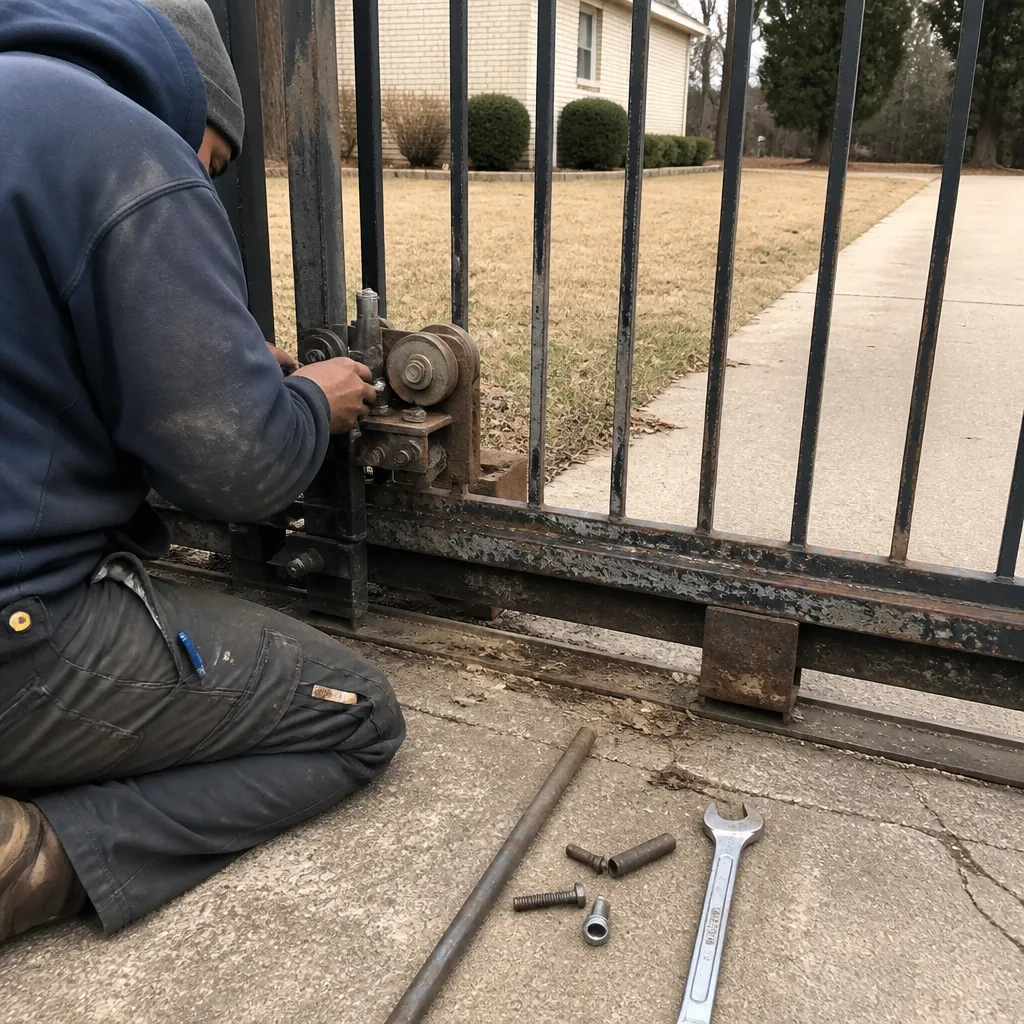 Before
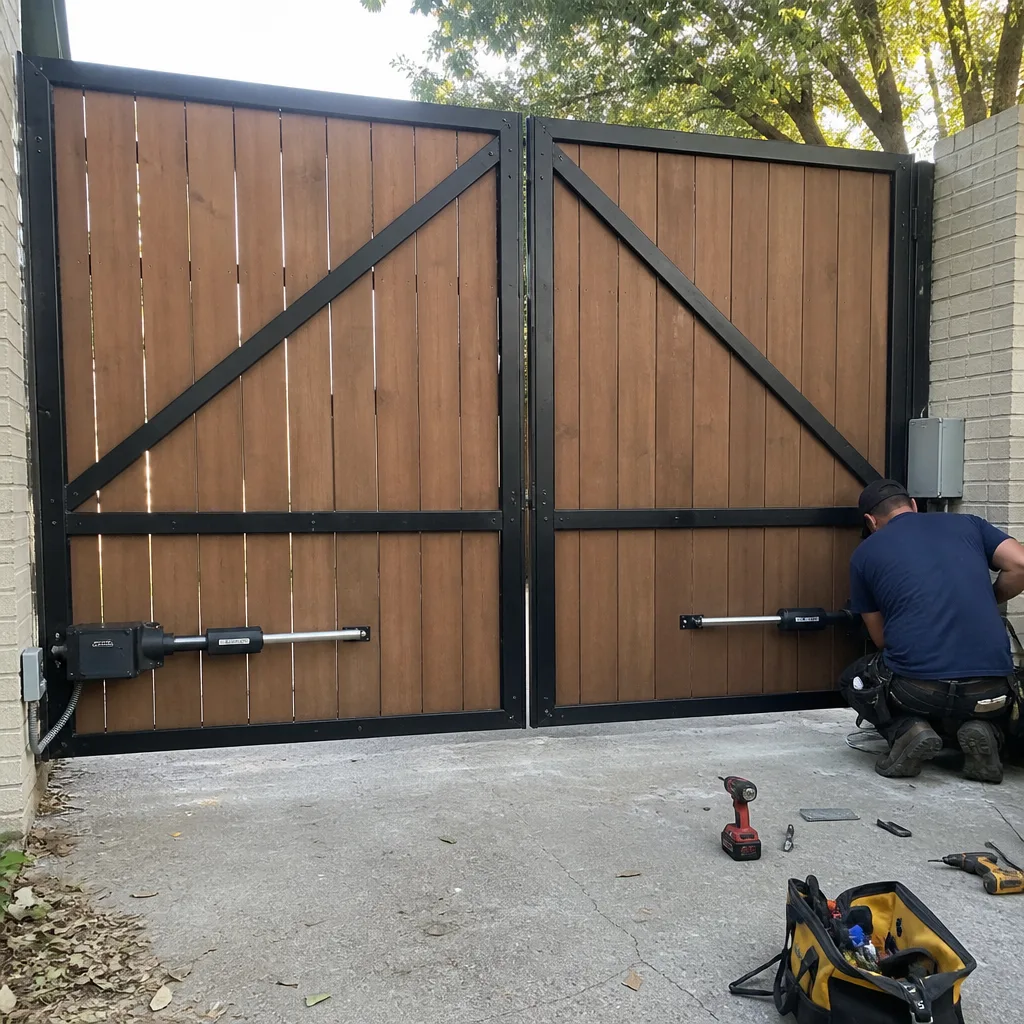 After
After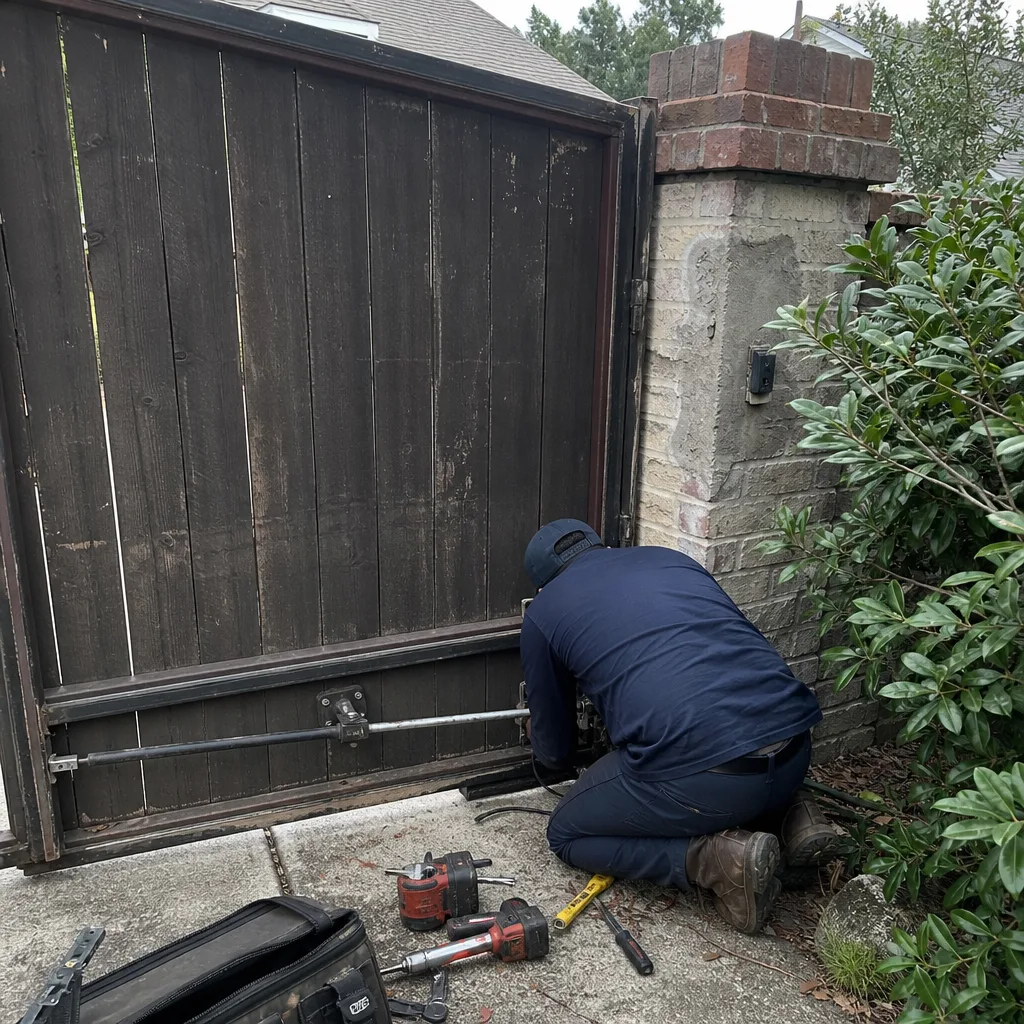 Before
 After
After Before
 After
AfterWhen to Call a Professional
Call a professional the moment you confirm any of the stop-and-call warning signs: a humming gate that won’t move, unpredictable reversal, a failed sensor test, or any burning smell. These are not weekend projects. They’re active failures that accelerate with use. Call when you notice hesitation, because the diagnostic tools needed, a multimeter and the ability to trace capacitor health, are not household items, and probing a control board without training risks the board itself. Call when your remote range shrinks and a new battery doesn’t fix it. If you’re in Fort Worth and you’ve spotted any of the warning signs in this guide, electric gate repair in Fort Worth starts with a free estimate at (682) 432-9830. We’ll give you a written price before any work starts, and we don’t charge for the second visit if the first repair doesn’t hold.
Frequently Asked Questions
Most Fort Worth gate repairs run $180 to $340 before parts, with simple fixes like capacitor replacement or sensor realignment landing at the lower end and board or motor work at the higher end. Parts add $15 to $300 depending on the component, and we give you a written price before any work starts. Call (682) 432-9830 for a free estimate on your specific gate and opener.
A gate that hesitates before moving is usually reporting a failing capacitor or a voltage drop across a corroded connection. In Fort Worth’s heat, capacitor failure is the most common cause. This is a repair that runs $80 to $150 when caught early, and it’s the single best example of a warning sign that’s cheap to fix and expensive to ignore.
Yes. Calder Gate Repair Fort Worth dispatches background-checked, uniformed technicians in Fort Worth with live, trackable arrival times, and most common repairs like sensor realignment, capacitor replacement, and limit switch adjustment are completed in a single visit. Call (682) 432-9830 to check availability in your part of Fort Worth.
Hot-weather gate problems are typically thermal overload. The motor’s internal windings heat up in the Fort Worth summer, the thermal switch trips, and the gate shuts down or reverses mid-cycle. This is the motor working at its limit, and continuing to run it across a hot summer shortens its service life significantly.
A sensor problem is consistent: the gate reverses at the same point every cycle or refuses to close when something is in the beam path. A wiring problem is inconsistent: the gate reverses at different points or only sometimes. Consistent points to the sensor. Inconsistent points to the wiring, which typically needs a harness replacement rather than a sensor adjustment.
Yes. We’re factory-familiar with nine major gate opener brands including Mighty Mule, LiftMaster, FAAC, BFT, Linear, Viking, Ghost Controls, DoorKing, and Elite. We see a lot of Mighty Mule and LiftMaster units across Fort Worth, and our technicians carry common replacement parts for both in their vehicles. Call (682) 432-9830 to confirm parts availability for your specific model.
The Bottom Line
Your gate telegraphs its failures. The hesitation, the new sound, the shrinking remote range, the sag you can see from the street. None of these are normal aging. Each is a specific component signaling distress, and each has a repair window that’s dramatically cheaper than the failure it precedes. In Fort Worth, where heat and clay soil accelerate every wear pattern, attention pays off. Watch for the warning signs in this guide. Run the four diagnostics. And when something changes, call before it stops changing. Gate opener repair in Fort Worth with Calder Gate Repair Fort Worth is one call away at (682) 432-9830, with a written price before any work begins and a 365-Day Done Right Promise on every repair. Start at our Calder Gate Repair Fort Worth home page to learn more.
Written by Nico Alvarez, Owner at Calder Gate Repair Fort Worth, serving Fort Worth since 2009.