
Last updated October 16, 2026
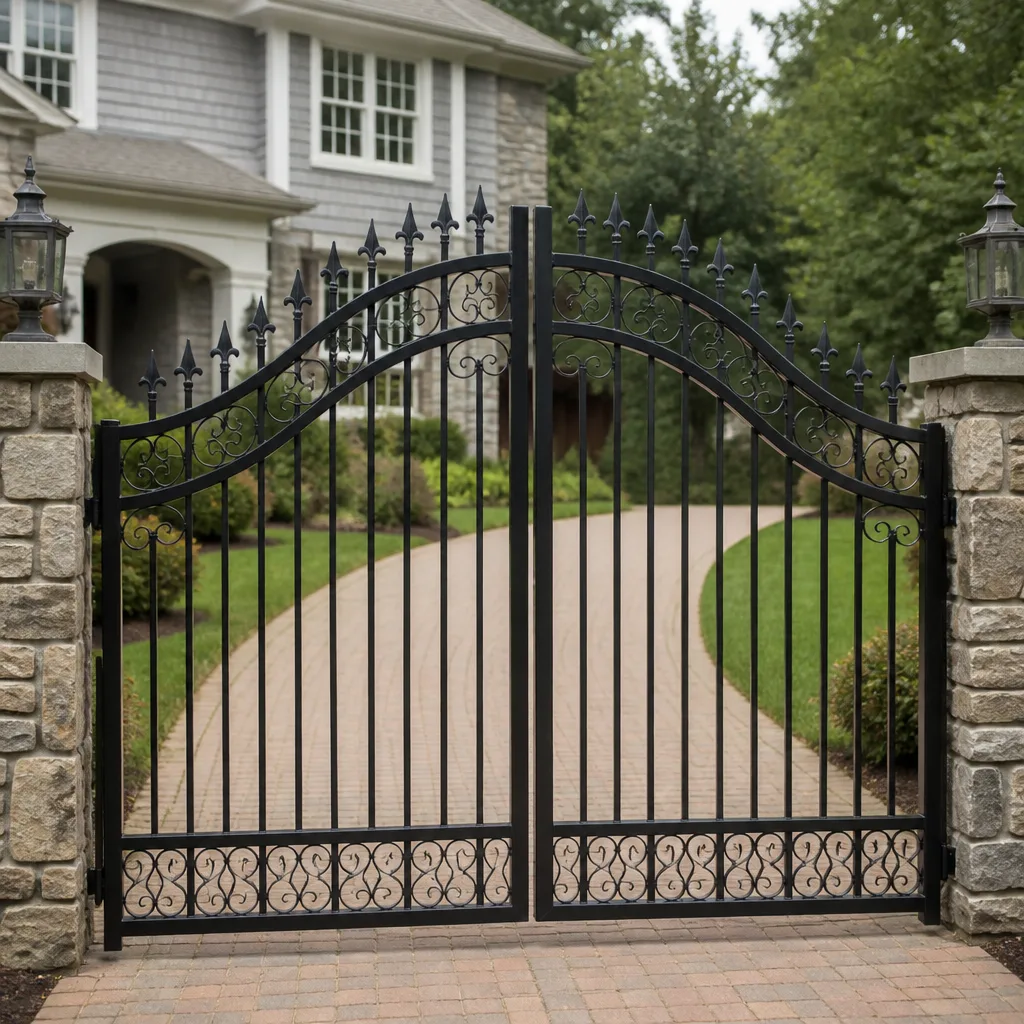 Wrought iron
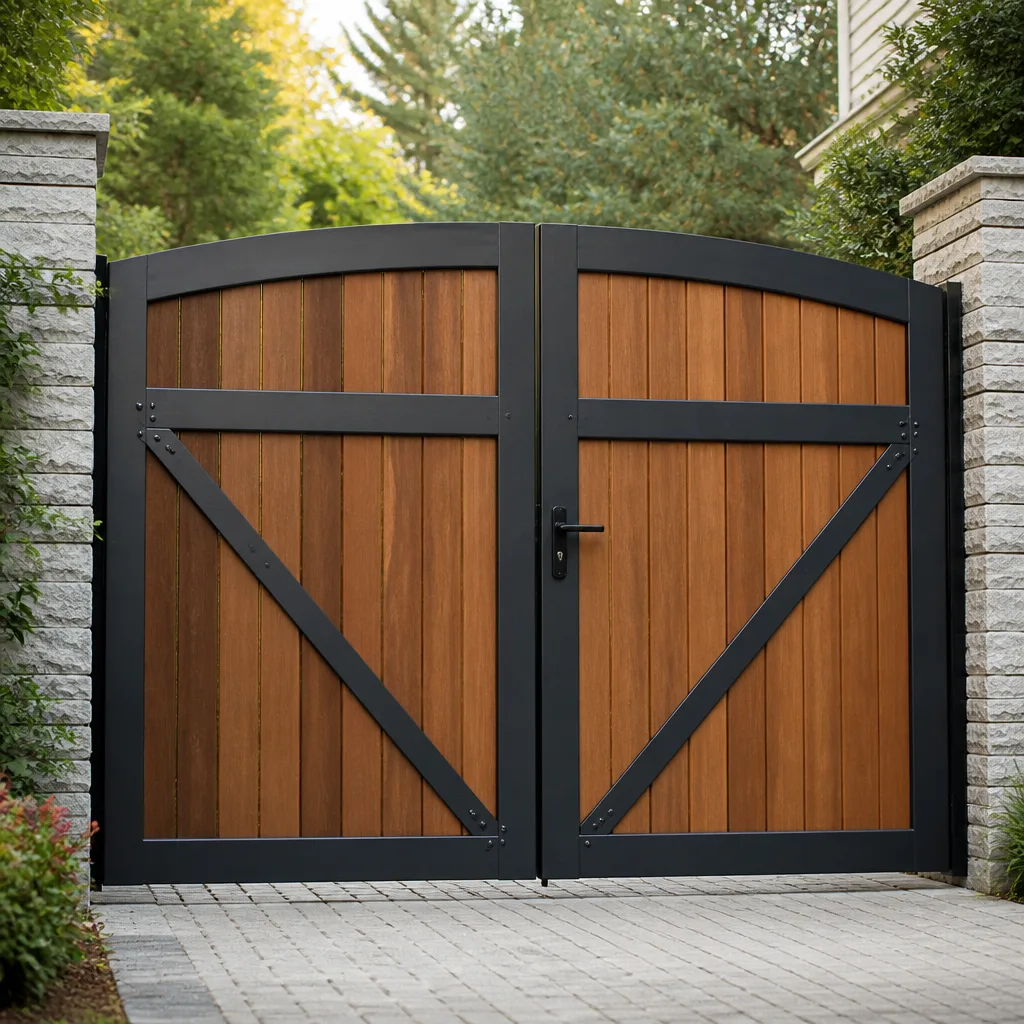 Wood & steel frame
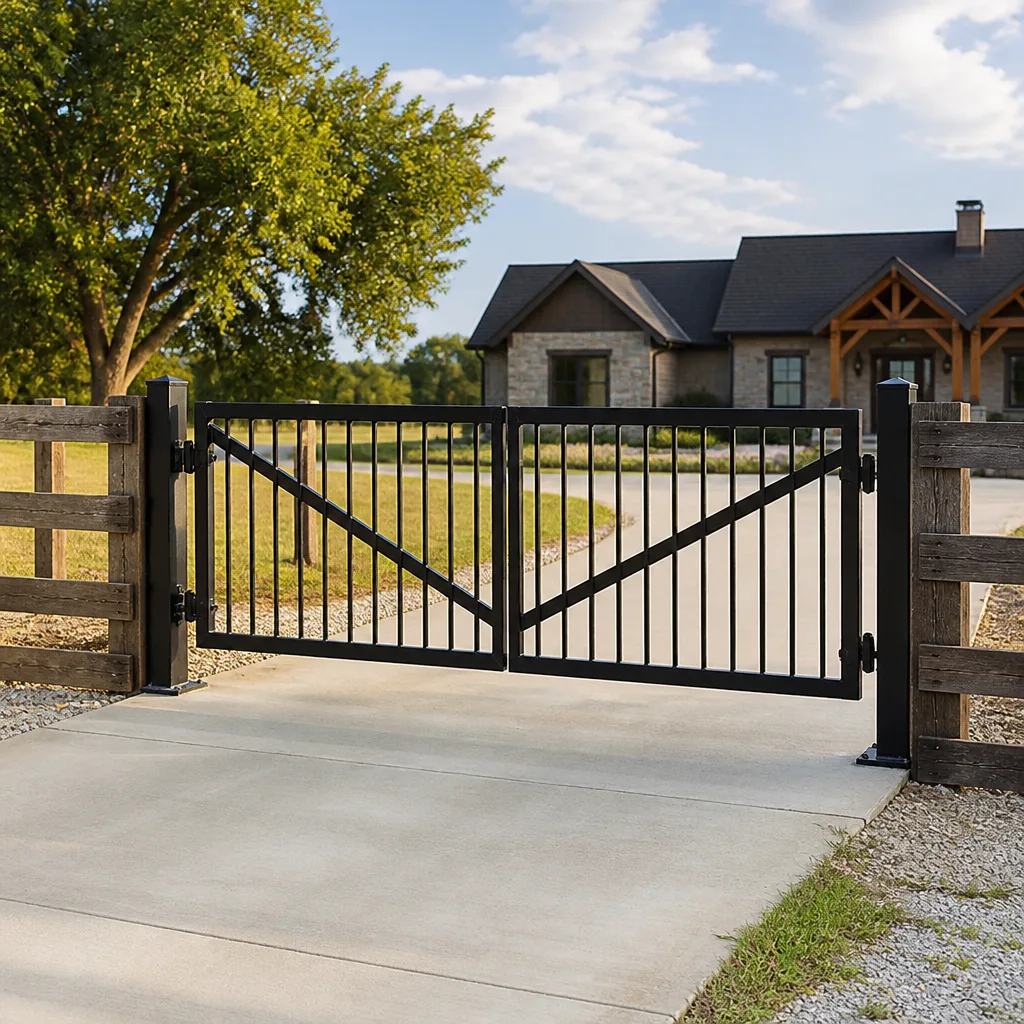 Farm & ranch
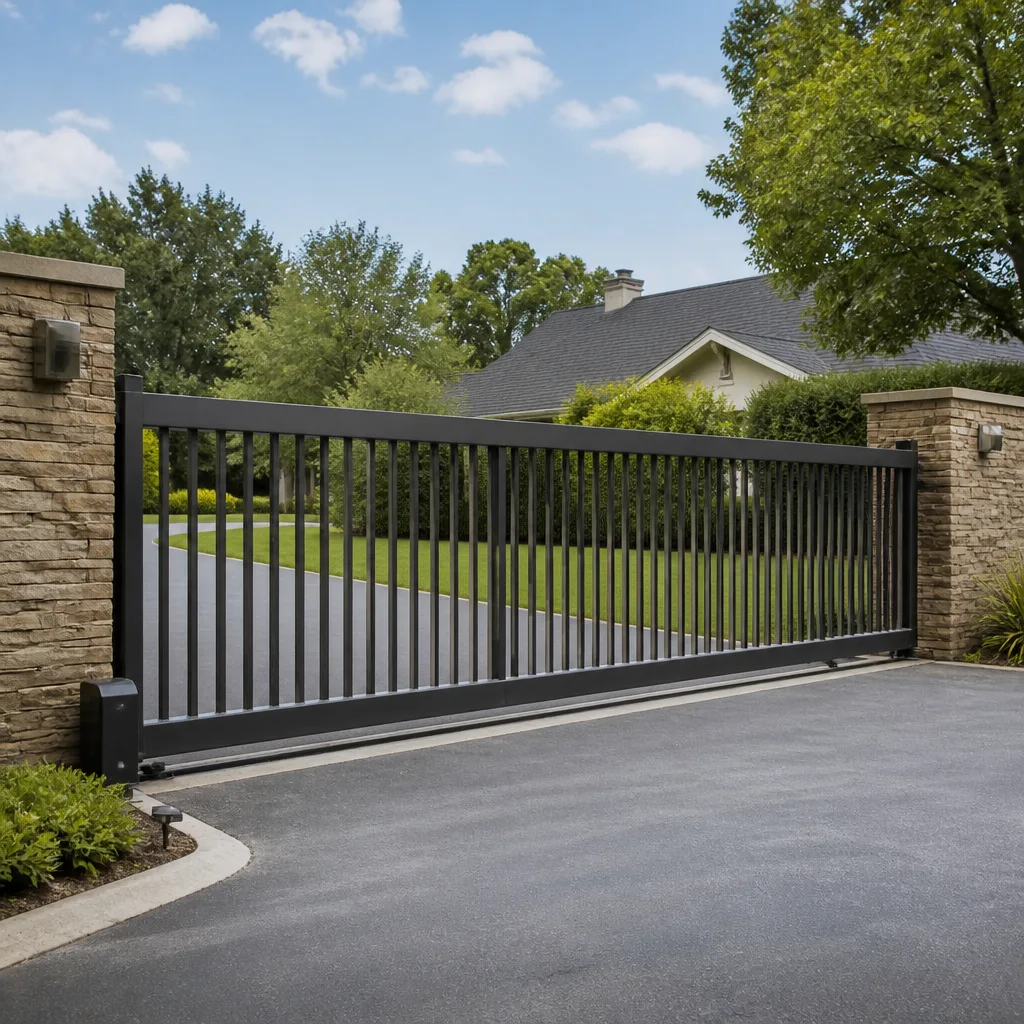 Sliding driveway gates
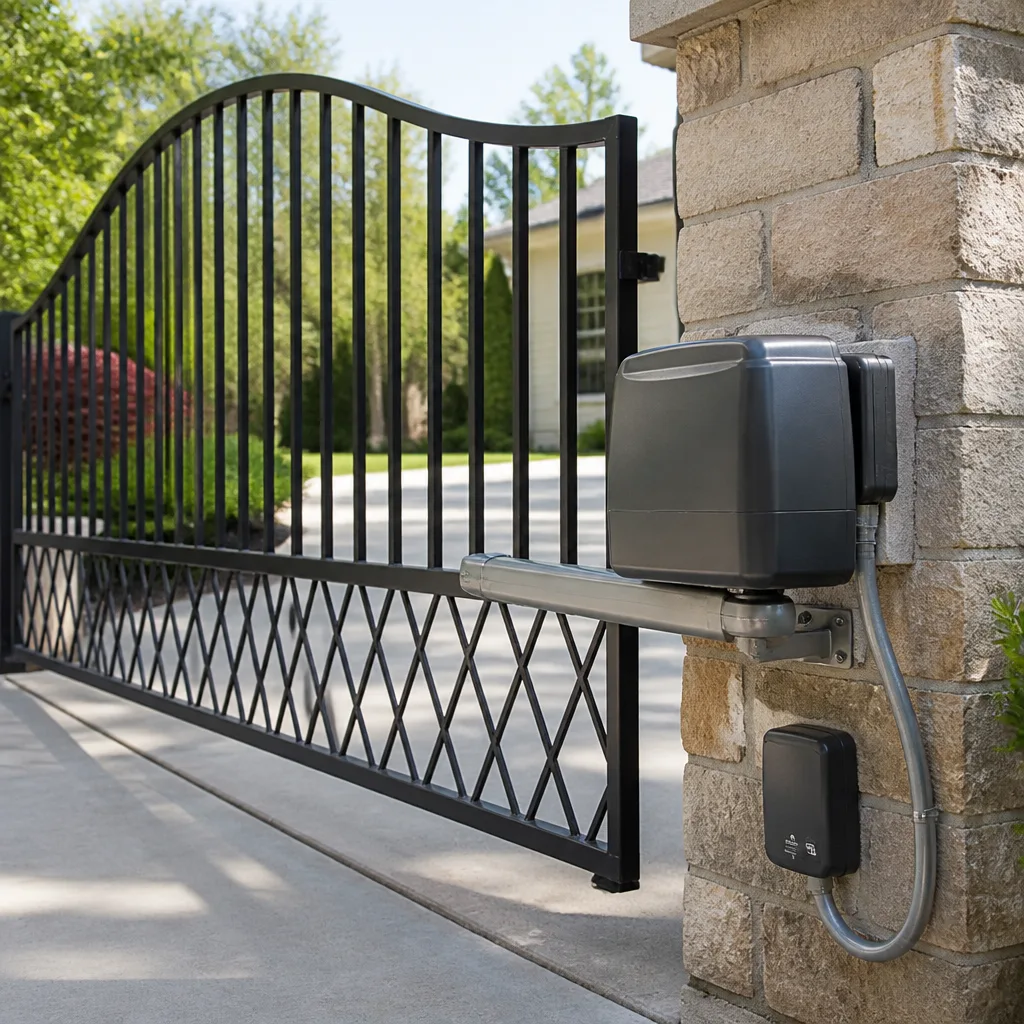 LiftMaster operators
Free on-site gate assessment - hinges, posts, and your LiftMaster or Nice gate operator checked before anything is quoted
The assessment is free and the quote is the invoice.
Get your free estimateThe Complete Guide to Gate Repair in Fort Worth
Fort Worth’s clay-heavy soil shifts up to two inches between wet and dry seasons. That single fact explains why more than half of the gate alignment calls we respond to across the city have nothing to do with the opener motor and everything to do with the post the gate hangs on. This guide maps the actual conditions in Fort Worth (caliche out in Parker County, August heat on wrought iron, HOA design rules in Aledo and Fossil Creek) to the specific failures they cause, the dollar thresholds that determine repair versus replacement, and the brand-level details most guides skip entirely. By the end, you’ll know exactly what’s wrong with your gate, roughly what it should cost, and whether you need a technician or just a five-minute adjustment.
Quick Answer
Gate repair in Fort Worth typically costs $180 to $480 for common fixes like alignment, limit switch replacement, and opener board swaps, while full gate opener replacement runs $650 to $1,600 installed depending on brand and horsepower. Most repairs are completed in a single visit, and the specific fix depends on whether the failure is mechanical (post, hinge, wheel, track), electrical (board, capacitor, sensor), or structural (soil movement affecting the post). Call a gate specialist before assuming the opener is dead; roughly half of “dead opener” calls in Fort Worth turn out to be a misaligned safety sensor or a post that shifted half an inch in the clay.
Styles & brands we work with
Table of Contents
- How Fort Worth Soil and Weather Create Unique Gate Failures
- Seven Most Common Gate Problems in Fort Worth
- Brand-by-Brand Breakdown: What Fort Worth Subdivisions Actually Run
- Repair vs. Replacement: The Dollar Thresholds That Decide
- HOA Design Rules in Aledo, Westover Hills, and Fossil Creek
- The Relay Standard: What the Booking-to-Invoice Experience Looks Like
- What Gate Repair Costs in Fort Worth (Real Numbers)
- Preventive Maintenance That Works in North Texas
How Fort Worth Soil and Weather Create Unique Gate Failures
Before we talk about motors and hinges, we have to talk about what’s under your gate. Fort Worth sits on a mix of Houston Black clay and, as you head west toward Parker County, an underlayer of caliche that behaves differently than the soil found in Dallas’s sandier eastern suburbs. That soil expands when wet and contracts when dry, and the movement isn’t subtle. A gate post set in concrete can move half an inch to two inches seasonally, and when it does, the gate leaf that once cleared the latch by a quarter inch now drags against it or hangs visibly crooked.
We see this pattern repeat across Tarrant County. In older neighborhoods like Ridglea Hills and Berkeley Place, gates installed twenty years ago were often set in shallow concrete pads that predate modern frost line and soil movement standards. In newer builds in Walsh, Chisholm Trail, and the subdivisions ringing Lake Worth, the concrete work is usually better, but the gates themselves are heavier, longer, and more reliant on opener electronics that don’t tolerate a quarter-inch misalignment.
Then there’s the heat. August in Fort Worth regularly pushes 100 degrees, and that thermal cycling does three things to a gate system. It bakes the capacitors on opener control boards, which is why we replace more capacitors on Viking and Linear openers in August than any other month. It warps lighter aluminum frames, especially powder-coated ones that absorb direct sun all afternoon. And it desiccates the plastic gears inside entry-level openers sold at local hardware stores, leaving them brittle enough to strip on the next cycle. Gate repair in Fort Worth is as much about understanding these local failure patterns as it is about knowing how to wire a board.
What This Means for Your Gate
- Clay soil movement: If your gate sags, scrapes, or won’t latch after a heavy rain or a long dry spell, the post is the likely culprit, not the opener.
- Caliche hits: Homes on the west side of Loop 820 toward Aledo often sit on caliche that drains fast in some spots and holds water in others, creating uneven settling that torques gate frames.
- August heat: Capacitor failures, warped aluminum, and stripped plastic gears all spike during the hottest weeks of the Fort Worth summer.
- Spring storms: Hail and high winds knock safety sensors out of alignment and bend gate arm brackets, two of the most common repair calls we get between March and May.
Seven Most Common Gate Problems in Fort Worth
Homeowners asking about gate repair in Fort Worth usually describe the same handful of symptoms. Here’s what they mean, in order of how often we see them.
1. Gate Opens Fine But Won’t Close (or Vice Versa)
This is almost always the limit switch, the small sensor inside the opener that tells the motor when to stop turning in each direction. If the switch fails or shifts, the opener thinks the gate is still traveling and cuts power early, or it overrides and keeps pushing past the close point. On LiftMaster and DoorKing residential openers, the limit switch is a small mechanical or magnetic trigger that lives inside the housing. On BFT and FAAC hydraulic units common in larger estate gates, it’s an internal cam. The fix is usually a $35 to $90 part plus labor, not a new opener.
2. Gate Sags or Scrapes the Ground
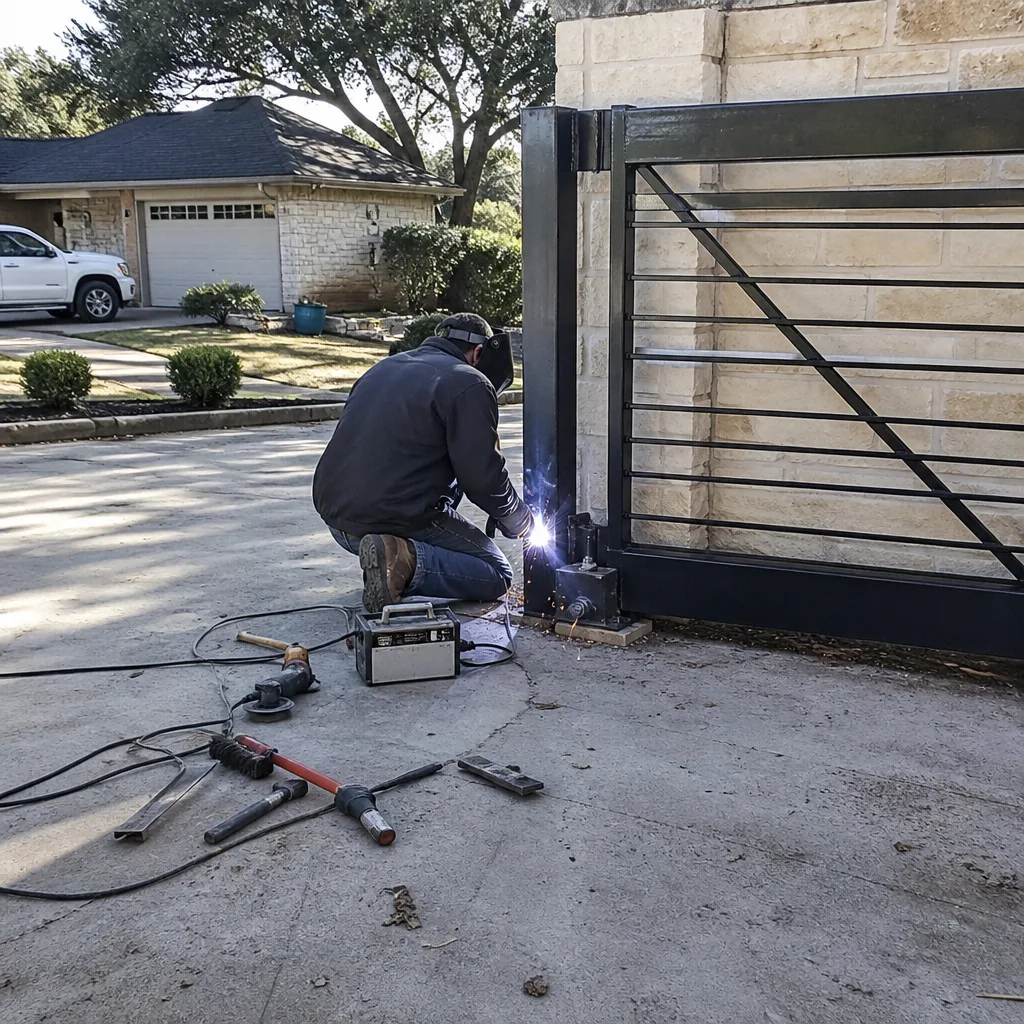
A sagging gate in Fort Worth is nearly always a hinge or post problem. Weld-on hinges crack at the weld point after years of weight plus soil shift stress. Post-mount hinges pull out of the concrete when the post itself moves. If the gate leaf sags at the free end but lifts at the hinge end, the bottom hinge has failed. If the entire gate tilts uniformly, the post has moved in the clay. The first is a hinge replacement; the second requires the post to be re-set or shimmed, and that’s a different job with a different price tag. Start with a level. If the post is out of plumb, the hinge is the symptom, not the disease.
3. Opener Motor Runs But Gate Doesn’t Move
On chain-driven openers, this is usually the chain slipping off a worn sprocket or a shear pin that has done its job and snapped. On gear-driven units, it’s a stripped gear. On hydraulic systems, it’s low fluid or a bypassed valve. The diagnostic difference matters because replacing a chain is a minor fix, while a stripped gear on an entry-level opener often means the unit is financially done. When a gear strips on an opener with ten years of Fort Worth summers behind it, we usually tell the customer the money is better spent on a new unit.
4. Gate Beeps But Won’t Open
A beep with no movement means the opener’s control board is getting power and receiving a command, but the motor isn’t receiving the signal to start. On Mighty Mule and Ghost Controls openers, this is often a failed capacitor or a tripped thermal overload. On Linear and Viking units, it can be a bad relay on the motherboard. The capacitor fix is cheap. The board fix is not. A technician who can test the capacitor before quoting you a board replacement will save you several hundred dollars.
5. Safety Sensors Keep Triggering
Gate safety sensors, also called photo eyes, are the small paired devices mounted near the base of the gate opening. If they get misaligned, dirty, or hot, they send a “blocked” signal and the opener refuses to move. In Fort Worth, we see sensor failures spike after storms, during pollen season (Fort Worth’s elm and oak pollen settles in a fine film on sensor lenses), and after a post shifts enough to knock the two sensors out of eye-to-eye alignment. Clean the lens first. If that doesn’t work, call a technician before you start buying parts.
6. Remote Control Stopped Working
This one is a ten-minute nuisance or a complete opener replacement, depending on age. If the gate is older and the remote was installed in the era before rolling code encryption, the fix can be as simple as reprogramming. A good guide to the brands most Fort Worth homes run will also tell you whose remotes are universal and whose are proprietary. Viking and Linear remotes are widely available and inexpensive. BFT and FAAC remotes are more specialized and cost more. If the opener is from the 2000s and uses an obsolete radio frequency, you may need a receiver upgrade rather than a new remote.
7. Gate Opener Makes a Grinding Noise
Grinding is always metal on metal, and it’s never a good sound. On chain-driven openers it means the chain is loose or the sprocket teeth are worn. On gear-driven openers it means the gear face is stripping. On swing gates with a gate arm, it can mean the hinge bearing has failed and the arm is dragging. The longer a grinding gate runs without attention, the more expensive the fix. A $40 chain adjustment this month beats a $350 gearbox next month.
Brand-by-Brand Breakdown: What Fort Worth Subdivisions Actually Run
Calder Gate Repair is factory-familiar with nine major gate opener brands: LiftMaster, FAAC, BFT, Linear, Viking, Ghost Controls, DoorKing, Elite, and Mighty Mule. In Fort Worth specifically, the mix isn’t random. It follows the housing stock.
LiftMaster and Ghost Controls: The Subdivision Standard
In mass-built communities like Walsh, Chisholm Trail Ranch, and the developments off North Tarrant Parkway, LiftMaster dominates. Builders know the brand, parts are easy to source, and the wired keypads integrate with a broad range of entry systems. Ghost Controls appears more often on single-swing driveway gates where the homeowner installed a kit from a retailer. Both brands are reliable, but Ghost Controls’ plastic gear housings don’t love the Fort Worth heat, and LiftMaster’s recent board revisions have a tighter diagnostic sequence that can trip up a DIY swap.
FAAC and BFT: The Estate and HOA Gate Workhorses
Once you move into Aledo, Westover Hills, and the acreage parcels on the northwest side, the openers change. FAAC and BFT hydraulic operators are the dominant choice for heavy ornamental steel gates, the kind that weigh 600 to 1,500 pounds. These are commercial-grade units that last decades if maintained, but they demand fluid changes, pressure checks, and a technician who understands hydraulic valve logic. When a FAAC gate misbehaves, the fix is rarely a part swap. It’s a system diagnostic. We maintain a separate stock of FAAC and BFT hydraulic fluid, seals, and valve kits specifically for these Fort Worth estate gates.
Viking, Linear, and DoorKing: The Access Control Layer
Viking and Linear are most common in Fort Worth as telephone entry and keypad access controllers paired with another brand’s gate operator. DoorKing appears on gated communities and commercial entrances, often tied to a loop detector under the driveway. When a Fort Worth HOA gate “won’t open from the keypad,” the keypad is Viking or Linear, and the opener behind it might be anything. Sorting out which layer has failed is the diagnostic challenge that separates a gate specialist from a general repair hand.
Mighty Mule and Elite: Two Different Realities
Mighty Mule is the most common DIY-installed opener in Tarrant County, and it shows. We replace more Mighty Mule openers than we repair, because the hardware is priced to be disposable. When a Mighty Mule fails after three or four Texas summers, the parts cost as much as a new unit, and the new unit ships with a better warranty. Elite openers, on the other hand, are built for commercial duty. We see them on larger residential properties and ranch entrances where a solar panel powers the operator through a battery bank. Gate opener repair in Fort Worth spans this entire range from throwaway DIY units to heavy commercial hardware, and the right course differs completely from one end of the spectrum to the other.
Repair vs. Replacement: The Dollar Thresholds That Decide
Every gate reaches a point where fixing it again is throwing money at a losing game. The decision comes down to three numbers: the age of the opener, the cost of the current repair, and the condition of the gate itself.
The 50 Percent Rule
If a single repair costs more than 50 percent of a new installed opener, replace. A replacement residential slide gate opener installed in Fort Worth typically runs $650 to $1,200 depending on brand and horsepower. So a board replacement quoted at $600 on a ten-year-old Mighty Mule is a bad spend. The same $600 board on a three-year-old FAAC that cost $3,500 installed is a good spend. The math has to consider the asset, not just the invoice.
Age as a Decision Factor
- 0-5 years: Repair almost always makes sense. The hardware is under warranty or recently out of it, and the failure is typically a single component.
- 5-10 years: Repair if the cost is under 40 percent of replacement and the gate itself is in good condition. At this age, Fort Worth’s heat has already begun degrading capacitors and plastic internals, so expect a second failure within a couple of years.
- 10+ years: Replacement is usually the better long-term call unless the unit is a commercial-grade FAAC, BFT, or Elite that was designed for a 20-year service life. Entry-level openers from this era owe you nothing.
The Gate Itself
The opener isn’t the only variable. If the gate leaf is rusted through at the bottom rail, the post is loose in the concrete, and the hinges are cracked, a new opener on a dying gate is a waste. A complete electric gate repair in Fort Worth that involves re-setting a post, replacing hinges, and painting a frame can run into the low thousands, at which point a new fabricated gate starts to look competitive. In our experience, a steel gate with a sound frame and a clean powder coat is worth keeping for another decade. A gate that’s rusting from the inside out and sags six inches at the free end is not.
HOA Design Rules in Aledo, Westover Hills, and Fossil Creek
Fort Worth’s HOA-heavy suburbs don’t just shape lawns and mailboxes. They shape gate repairs. If you live in a community with a design review committee, before you change anything visible (a gate color, a new opener arm, a different keypad), check your covenants. Some communities in Aledo require that any gate modification match the original architectural spec. Westover Hills has stricter aesthetic standards than most, and a gate that works fine but doesn’t match the approved finish can trigger a compliance letter just as fast as one that doesn’t work at all.
Fossil Creek and the communities off North Beach Street often have rules about gate height, wrought iron styling, and even the type of opener arm visible from the street. The practical takeaway: a repair that replaces a failing part with a like-for-like equivalent rarely needs HOA sign-off. A repair that changes the look of the gate, the control box, or the access panel might. We advise Fort Worth homeowners to check their HOA’s design guidelines before approving a visible change, and we’re happy to order parts in a finish that matches the existing hardware when the covenant language requires it.
Access control is the other HOA layer in Fort Worth. Communities with a shared entrance gate usually have a Viking or Linear telephone entry system tied to a DoorKing operator. If you’re an individual homeowner inside a gated community, your personal gate is your responsibility, but the shared perimeter gate is the HOA’s. The line isn’t always obvious, especially when a shared entrance gate also has a private guest keypad. We’ve walked Fort Worth homeowners through the distinction more times than we can count, because it changes who approves the work and who pays the invoice.
The Relay Standard: What the Booking-to-Invoice Experience Looks Like
Calder Gate Repair is part of the Relay Home Co. family, established 2009, and as an independent location we operate under The Relay Standard. Here’s what that means in practice, step by step, when you book with us, and you can always find more guides & resources on our blog.
- You call. A live person answers. Not a voicemail, not a bot. We book the appointment and give you a real arrival window with a live, trackable technician assignment. You’ll see the same kind of movement map rideshare apps show, instead of wondering whether anyone is actually coming.
- The technician arrives. Background-checked, in uniform, in a marked vehicle. They assess the gate, run diagnostics on the opener, and check the posts, hinges, and sensors. You get a written price for the repair before any work starts. The number on that sheet is the number on the final invoice. It does not change at the door.
- The repair happens. The technician photographs the work before and after. If a part is replaced, you see the old part. If an adjustment is made, you see the measurement.
- You pay from a link. The invoice arrives by text or email, and you pay with a tap. No paper, no checkbook, no phone call to settle up.
- The 365-Day Done Right Promise covers the work. If the repair fails within 365 days, we return at no charge. That promise is written on the invoice, not implied. You don’t have to remind us. It’s the doc.
This process came out of watching what Fort Worth homeowners actually hate about home repair: the four-hour windows, the surprise upcharge, the after-the-fact “well, the part was more than we thought” conversation. The Relay Standard exists to make those conversations structurally impossible.
What Gate Repair Costs in Fort Worth (Real Numbers)
We quote every job in writing before work starts, and we’d rather you know the market range before you call. These are the numbers we see across Fort Worth and the surrounding Tarrant County suburbs for a typical residential gate.
| Repair Type | Typical Cost Range (parts + labor) | Time on Site |
|---|---|---|
| Safety sensor alignment or replacement | $90 – $180 | 30-45 minutes |
| Limit switch adjustment or replacement | $110 – $220 | 45-60 minutes |
| Remote programming or receiver replacement | $85 – $240 | 20-45 minutes |
| Hinge replacement (weld-on, single hinge) | $180 – $380 | 1-2 hours |
| Gate post re-set in concrete (standard 4×4 steel post) | $350 – $700 | 3-5 hours |
| Opener control board replacement | $250 – $650 | 1-1.5 hours |
| Capacitor replacement | $85 – $150 | 20-30 minutes |
| Full gate opener replacement (residential slide or swing) | $650 – $1,600 installed | 2-4 hours |
| Chain and sprocket kit | $160 – $320 | 1-1.5 hours |
| Hydraulic service (fluid, seals), FAAC or BFT | $280 – $550 | 1.5-2 hours |
These are gateway numbers for standard residential work in the Fort Worth market. Heavy estate gates, long ranch runs, solar systems, and access control integration can push costs higher, and the only way to get a real number for your gate is a diagnostic visit. But these ranges tell you whether a quote you’ve already received is in the ballpark or in the weeds.
One more honest note: the cheapest quote isn’t the best quote. A hinge replacement that doesn’t address the loose post underneath saves you money for about four months. A board replacement on a ten-year-old opener with a stripped gear saves you money for about six weeks. When we quote a repair, we quote the fix that lasts, because our 365-Day Done Right Promise means we eat the cost of guessing wrong. You get one price, in writing, and it covers the repair the gate actually needs.
Preventive Maintenance That Works in North Texas
Gates in Fort Worth don’t fail randomly. They fail on a schedule driven by soil moisture, thermal cycling, and the slow degradation of moving parts. A maintenance pass twice a year, once after the spring rains and once before the August heat peak, catches most failures before they become emergencies.
What a Fort Worth Gate Maintenance Pass Should Include
- Post check: Level and plumb read on both gate posts, with movement flagged if it deviates from the last reading.
- Hinge inspection: Weld integrity, pin wear, and grease on every hinge point.
- Opener diagnostics: Board voltage, capacitor condition, gear wear, and limit switch function.
- Safety system test: Photo eyes aligned and clean, obstruction reversal functioning, warning beacons working.
- Chain tension and lubrication: Proper sag, clean links, and sprocket tooth condition.
- Battery backup check: If your opener has a battery backup, it should be load-tested, not just voltage-tested.
The Seasonal Thing Fort Worth Homeowners Forget
Late summer in Fort Worth is when the ground is at its driest and the clay has contracted to its smallest volume. That’s when posts that are going to loosen do it. The fall rains come, the soil swells, and a post that looked fine in September is suddenly a quarter inch out of plumb in November. If you hear your gate scrape for the first time after the first big fall rain, that’s the soil, not the gate. A maintenance visit before the wet season catches the early looseness while it’s still a $150 fix instead of a $500 re-set.
Common Mistakes to Avoid
- Assuming the opener is dead when the gate won’t move. In Fort Worth, misaligned safety sensors and shifted posts cause more “dead opener” calls than actual dead openers. A $90 sensor alignment beats a $700 opener replacement you didn’t need.
- Lubricating hinges with WD-40. WD-40 is a solvent, not a lubricant. It cleans the hinge and then dries it out, accelerating wear. Use white lithium grease on hinges and chain lube on chains.
- Skipping the HOA check before a visible repair. Aledo, Westover Hills, and Fossil Creek all have design covenants that can trigger a violation notice if your gate hardware doesn’t match the approved aesthetic. Like-for-like part replacements are safe; visible changes deserve a quick covenant check.
- Welding a hinge without checking the post. A new hinge on a post that’s out of plumb just means the new hinge carries the same torque that killed the old one. Check the post first.
- Buying a new remote before confirming the receiver frequency. Older Fort Worth gates run obsolete radio frequencies. A $40 universal remote that doesn’t match your receiver is $40 wasted. Call with the opener model number and we’ll tell you.
- Delaying a gear grind. That grinding noise is a bill that grows every cycle. A $40 chain adjustment today beats a $350 gearbox in six months.
- Replacing a capacitor and calling it fixed without testing the board. A blown capacitor is sometimes the cause and sometimes the symptom of a failing board. If you swap the capacitor and it blows again in three weeks, the board was the real problem. A technician with a meter can tell the difference on the spot.
See the difference
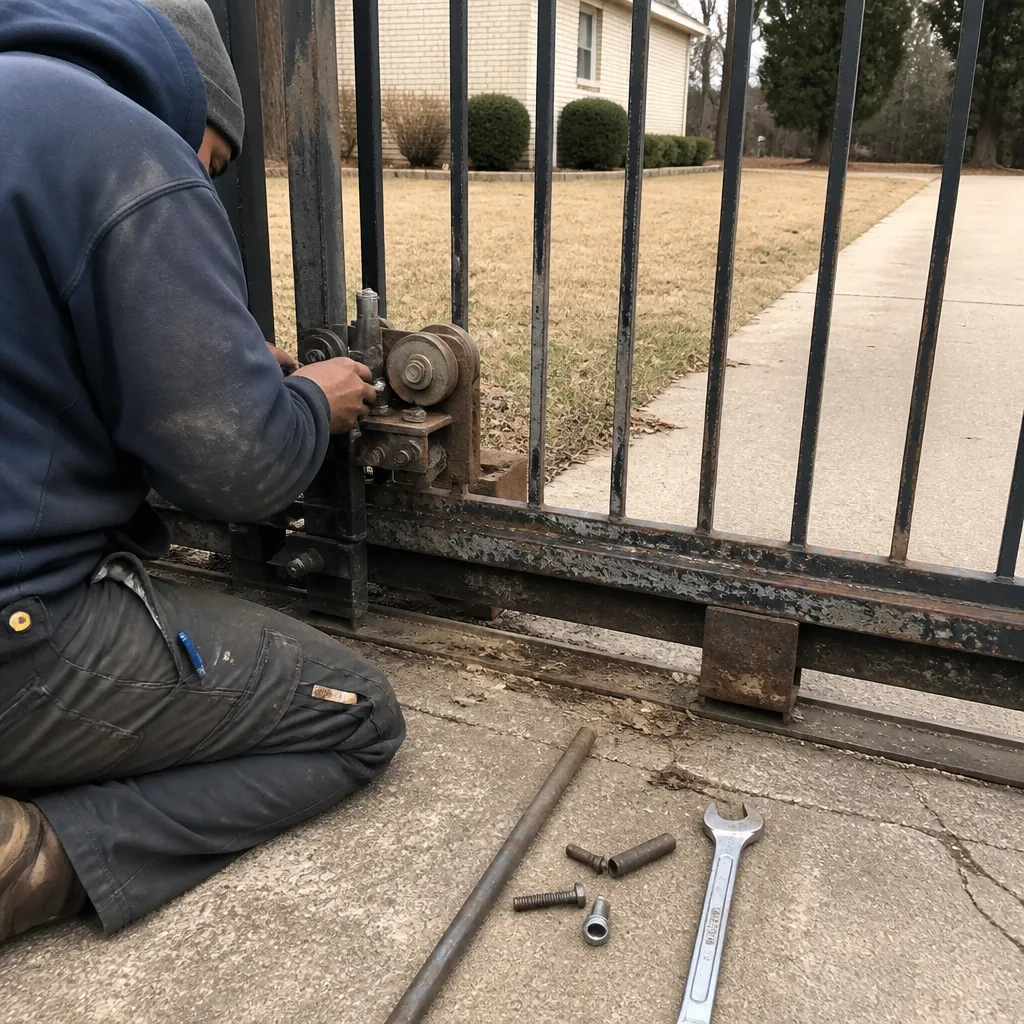 Before
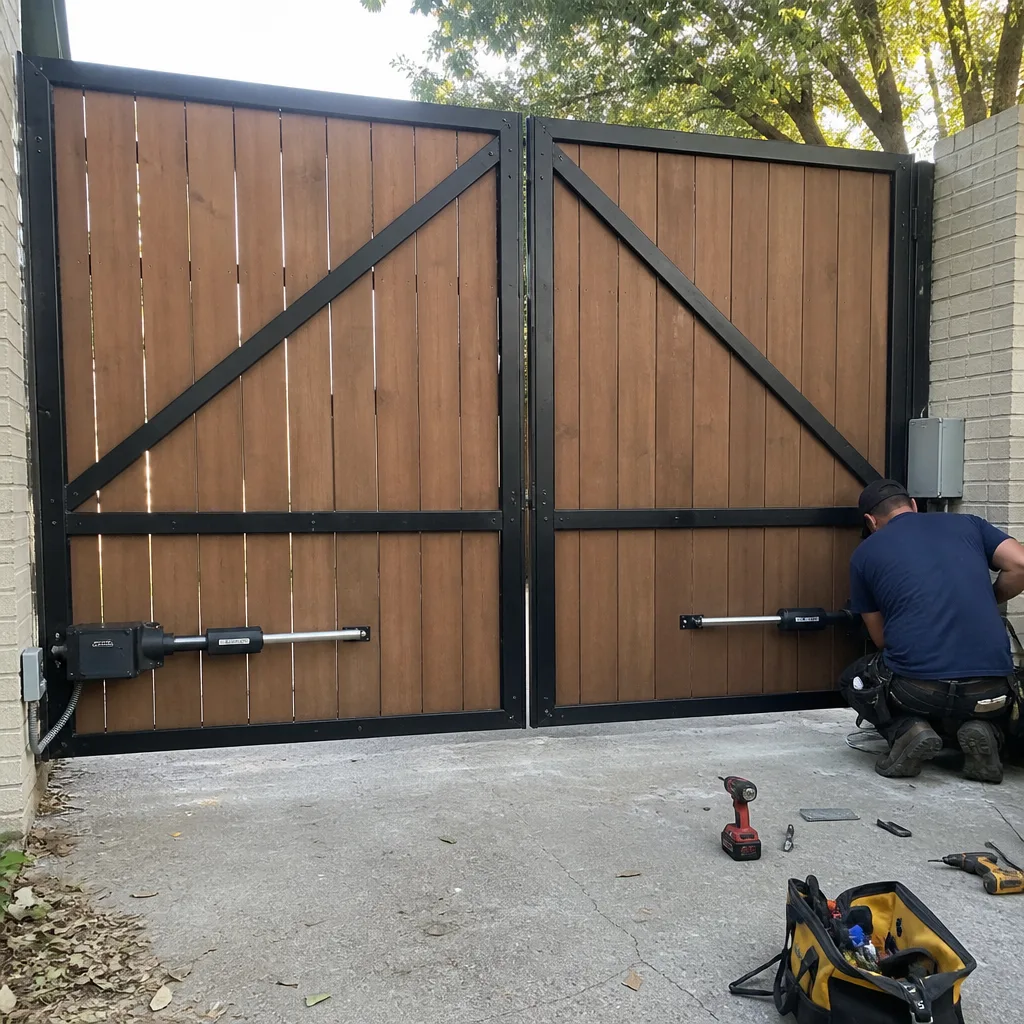 After
After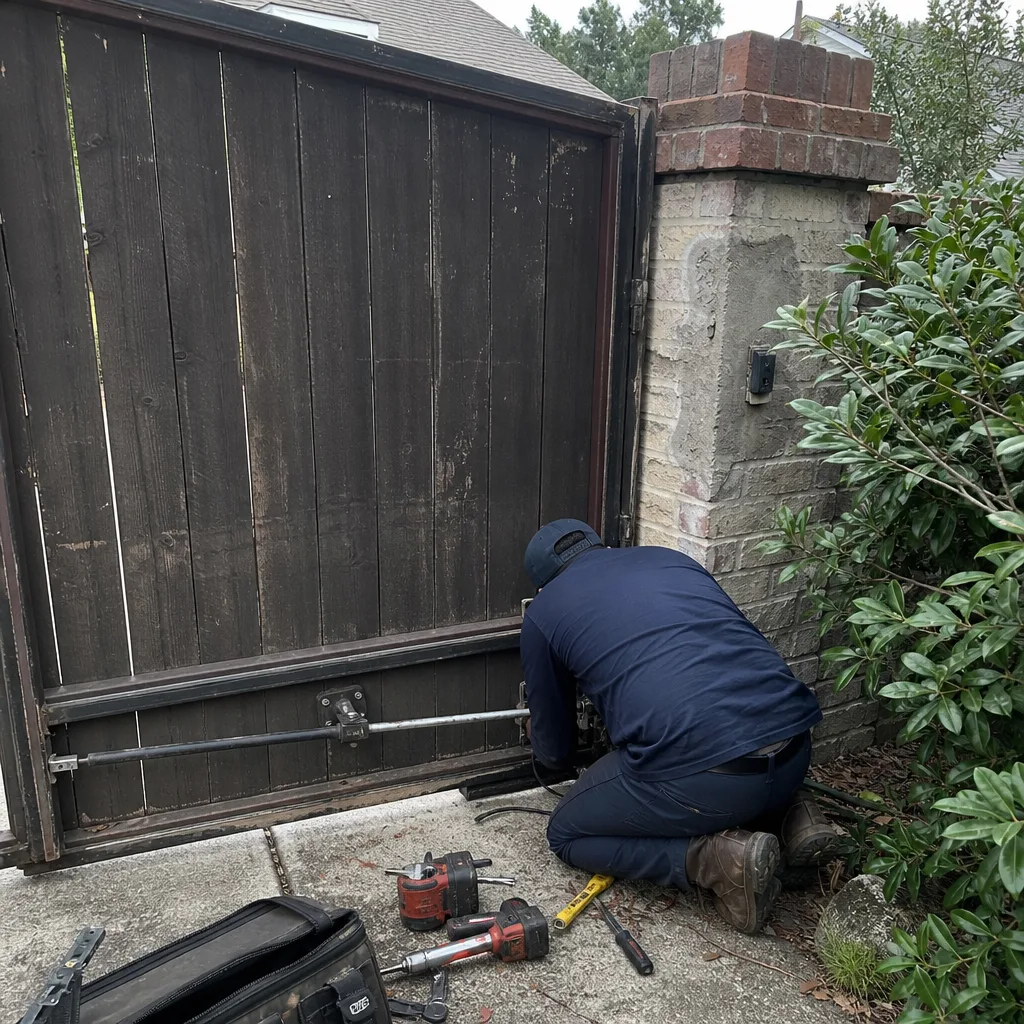 Before
 After
After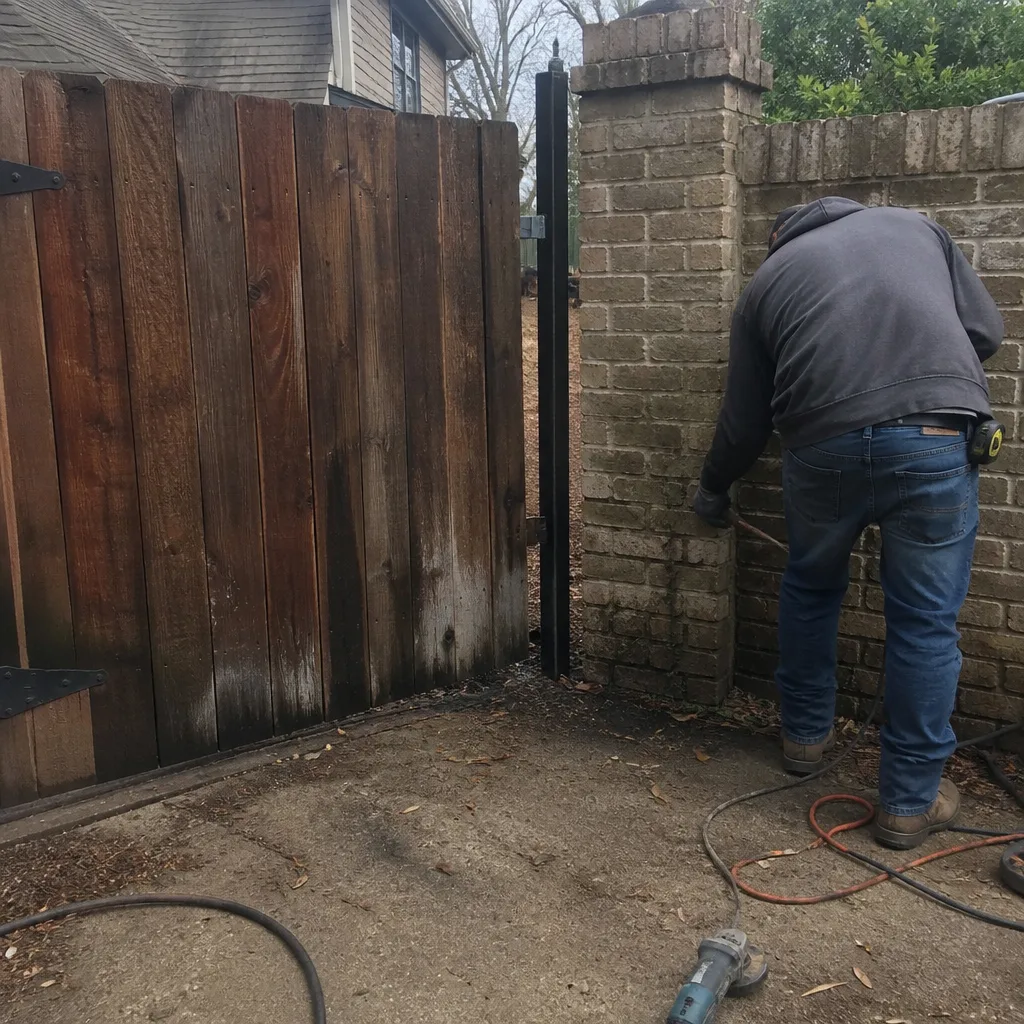 Before
 After
AfterWhen to Call a Professional
Call a gate professional if the gate is visibly sagging, the opener runs but the gate doesn’t move, the safety sensors will not stay aligned, or the gate makes a grinding noise every cycle. These are mechanical and electrical failures that don’t resolve themselves, and in the case of high-tension springs and heavy gate leaves, they can be genuinely dangerous to work on without the right equipment and approach. A gate that drops while you’re under it is a life-changing injury, and a spring under tension that releases unexpectedly is the same. We don’t give step-by-step instructions for those repairs, and we’d rather you didn’t attempt them. Calder Gate Repair Fort Worth offers free estimates across Fort Worth and the surrounding Tarrant County suburbs, call (682) 432-9830 and a live person will book your visit.
Frequently Asked Questions
Most residential gate repairs in Fort Worth run between $180 and $480 for common fixes like sensor alignment, limit switch replacement, hinge repair, and board swaps, while a full opener replacement lands between $650 and $1,600 installed. The price depends on the brand, the age of the unit, and whether the post or hinges are involved. We give every customer a written price before work starts, and we don’t change it at the door. Call (682) 432-9830 for a free estimate on your specific gate.
In many cases, yes. Same-day gate repair in Fort Worth is available for common failures like sensor misalignment, limit switch issues, and remote programming. Heavier repairs like post re-setting or full opener replacement are usually scheduled within a day or two because they require more time and materials. Call (682) 432-9830 and a live person will tell you honestly whether same-day is possible for your situation.
Fort Worth’s clay soil expands during the wet, cold months of late fall and winter, and that expansion shifts gate posts enough to pull the gate leaves out of alignment. Come summer, the soil dries, contracts, and the gate often loosens back up. The underlying problem is a post socket in the concrete that isn’t stable through the full moisture cycle. A post inspection with a level and plumb check will tell you whether a re-set is needed or a hinge shim will buy you time.
Yes. The diagnostic process is the same regardless of brand, and Calder’s technicians are factory-familiar with LiftMaster, FAAC, BFT, Linear, Viking, Ghost Controls, DoorKing, Elite, and Mighty Mule. Once we open the housing and find the model number, we can tell you what you have, how old it is, and what the brand-specific repair path looks like. Part of the service is identifying your equipment so you’re not flying blind on future maintenance.
Yes, we regularly work in Fort Worth HOA communities including Aledo, Westover Hills, and Fossil Creek. We’re familiar with the typical design covenant language and can help you determine whether a visible hardware change needs review board approval before we touch it. Like-for-like part replacements that don’t change the gate’s appearance rarely require HOA sign-off, but a color change, a new opener arm, or a different keypad might. We’ll flag it before you pay for anything.
For standard residential driveway gates in Fort Worth subdivisions, LiftMaster is the most common and has the easiest parts availability. For heavy ornamental steel gates on estate properties, FAAC and BFT hydraulic openers have the longest service life and the highest tolerance for our heat and soil conditions, though they cost more up front. Ghost Controls, Linear, and Viking all have their place depending on the gate weight, the access control setup, and your budget. We’ll give you a straight recommendation based on your actual gate, not a brand preference.
The Bottom Line
Fort Worth gate repair is a local discipline as much as a technical one. The clay soil under your post, the August heat on your capacitors, and the HOA covenants on your street all shape what goes wrong and what it costs to fix. Most repairs fall between $180 and $480, most are done in one visit, and most homeowners wait too long to make the call. If your gate is sagging, grinding, or ignoring its remote, the cheapest day to address it is the day you notice it. Calder Gate Repair Fort Worth writes the price before the work starts, and the Calder Gate Repair Fort Worth home page has everything you need to book a visit. Or just call (682) 432-9830 and talk to a live person. We’ll take it from there.
Written by Nico Alvarez, Owner at Calder Gate Repair Fort Worth, serving Fort Worth since 2009.