
Last updated October 16, 2026
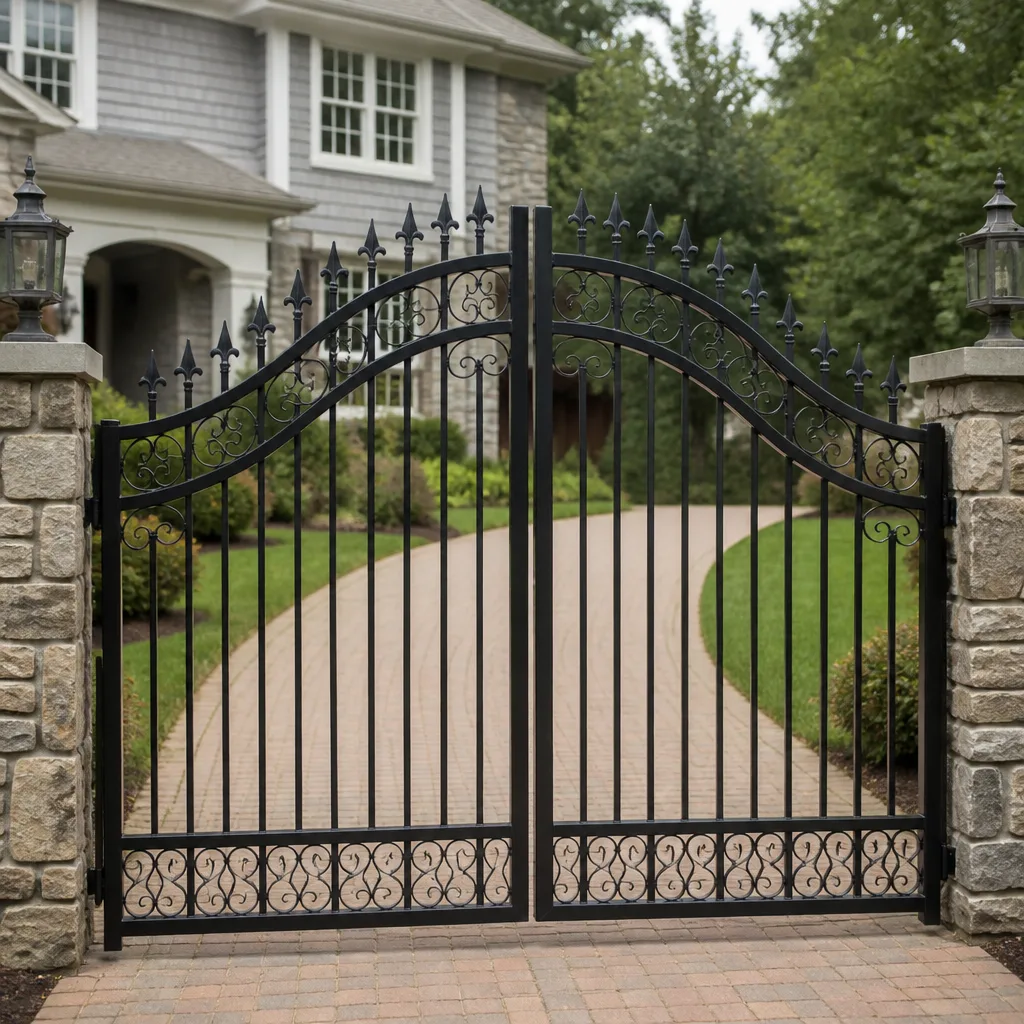 Wrought iron
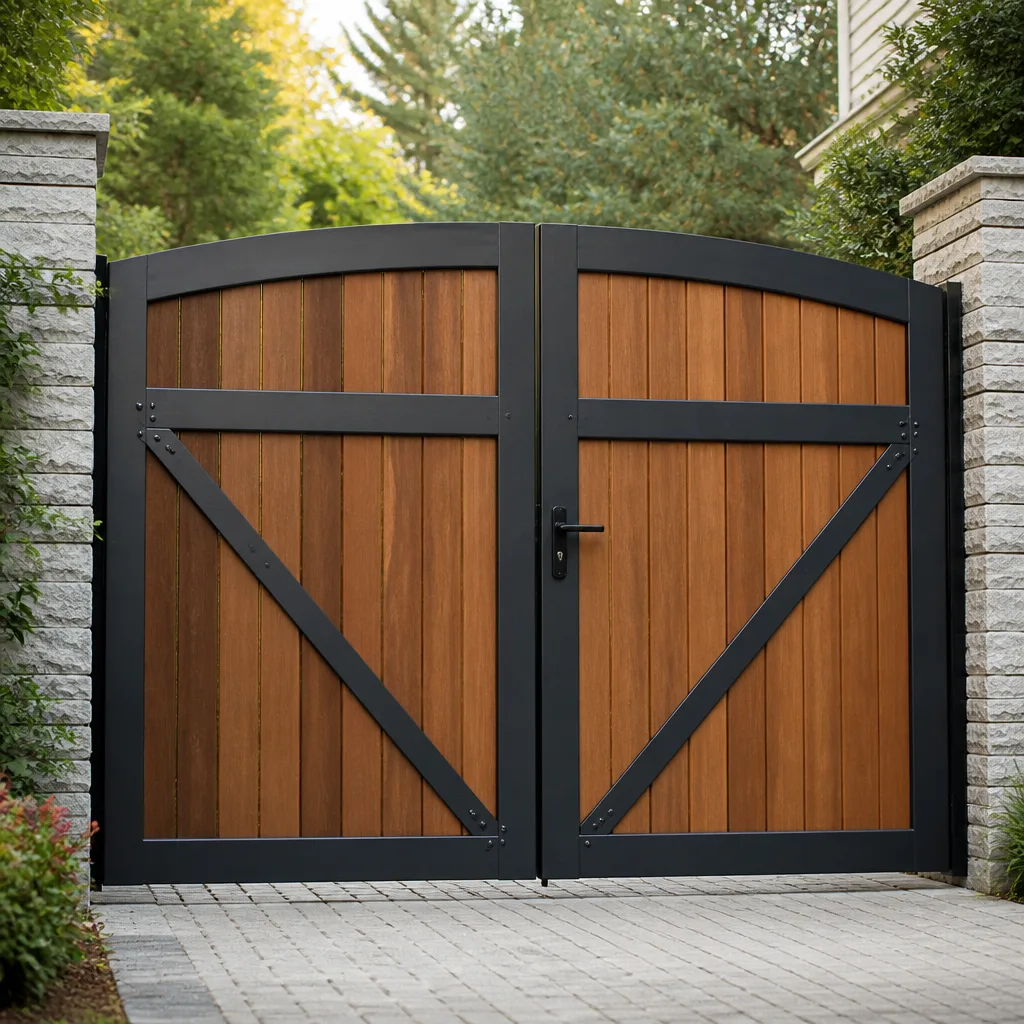 Wood & steel frame
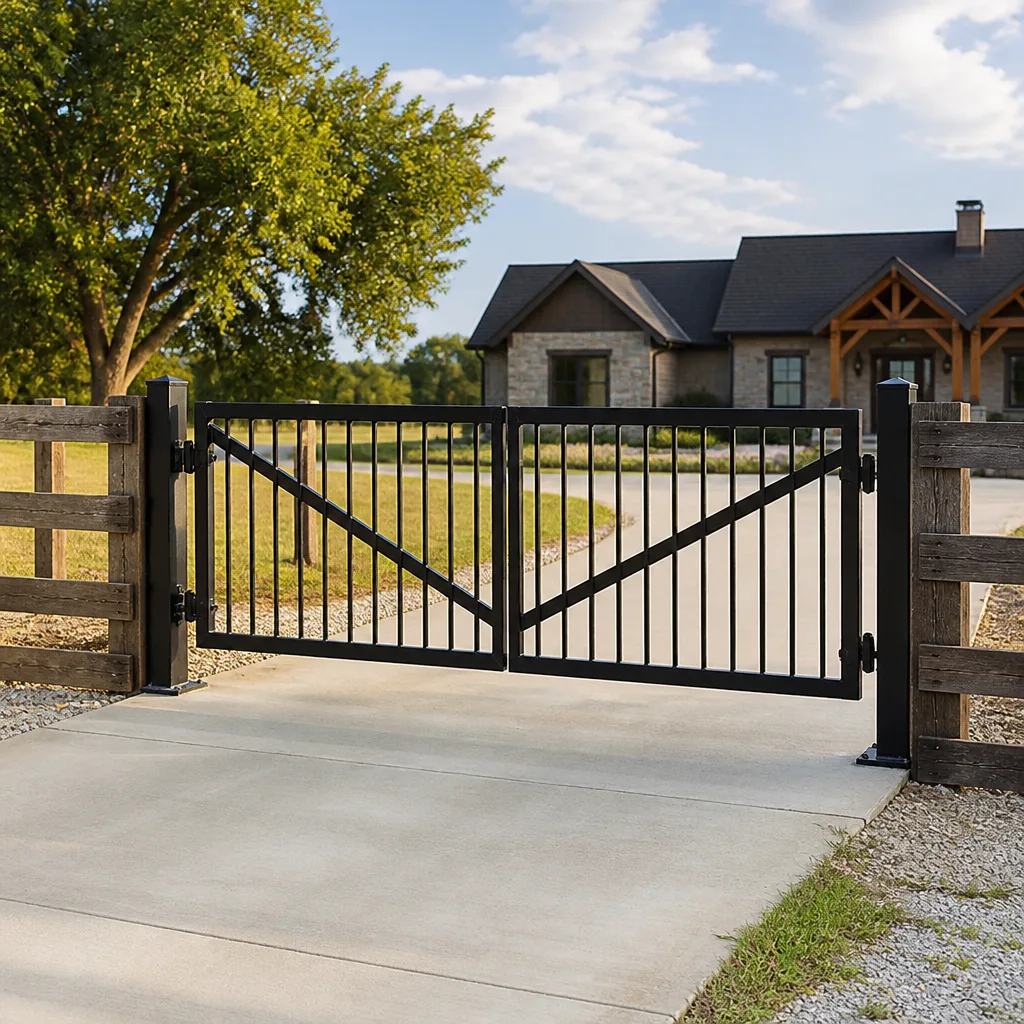 Farm & ranch
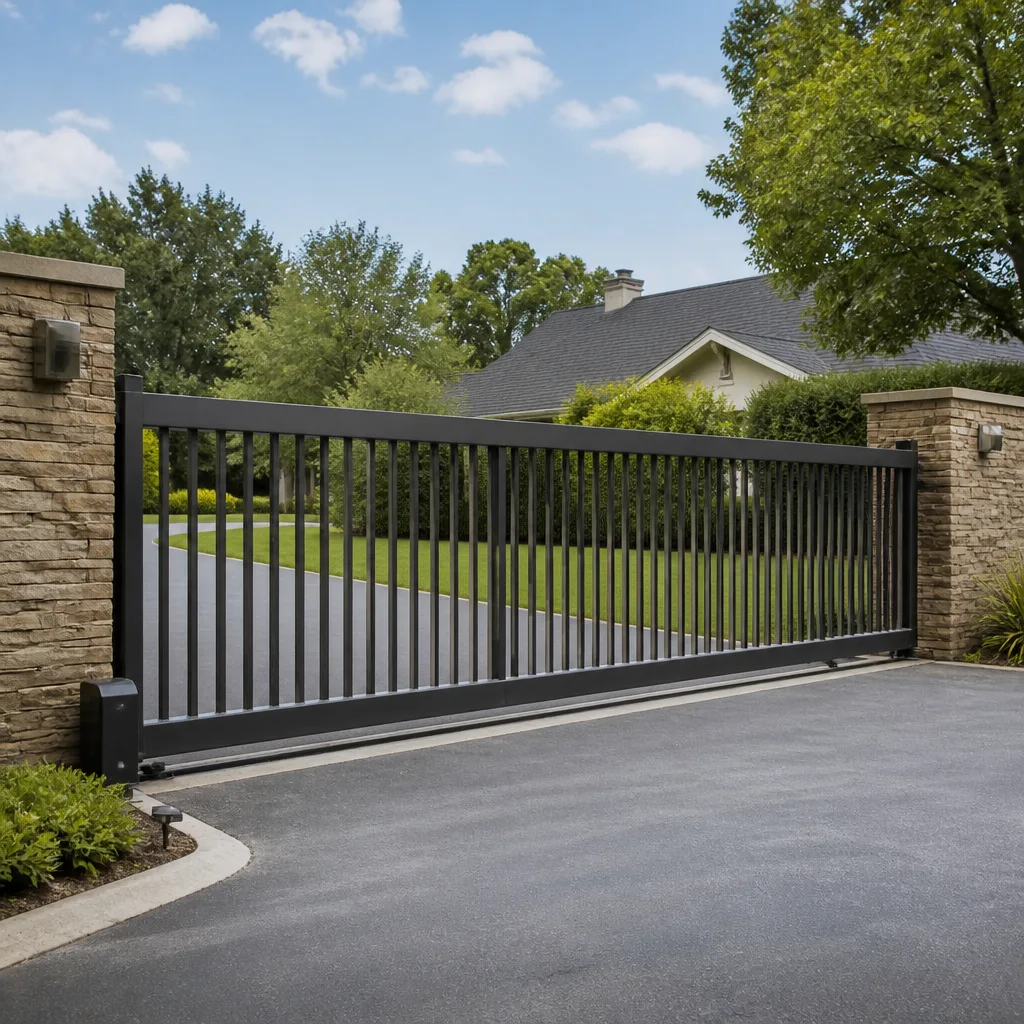 Sliding driveway gates
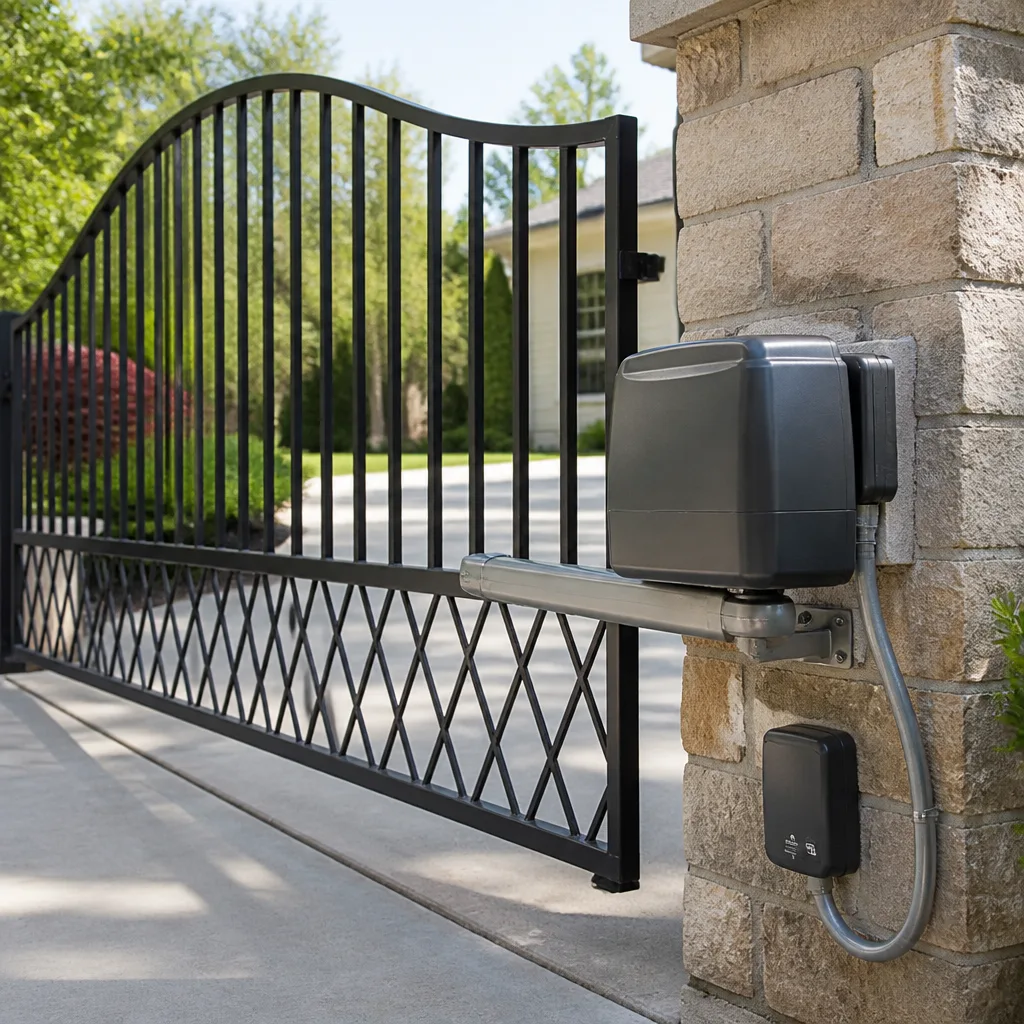 LiftMaster operators
Free on-site gate assessment - hinges, posts, and your LiftMaster or Nice gate operator checked before anything is quoted
The assessment is free and the quote is the invoice.
Get your free estimateDIY vs Professional Gate Repair: The Fort Worth Homeowner’s Decision Guide
Here’s the thing nobody tells you about automatic gates: the difference between a $14 fix and a $1,400 fix often comes down to whether you can correctly identify which part failed. We’ve watched Fort Worth homeowners replace a perfectly good control board because the real problem was a $3 fuse. We’ve also had to untangle welded gates in the July heat because a well-meaning neighbor “tightened” a limit switch into oblivion. This guide cuts through the YouTube bravado and gives you the honest three-tier system we use to help homeowners in Fort Worth decide what’s safe to touch and what deserves a professional.
Styles & brands we work with
Quick Answer
DIY gate repair makes sense for surface-level fixes: remote batteries, minor sensor alignment, tightening visible bolts, and clearing debris from the gate track. If the problem involves torsion springs, control boards, wiring voltage, or any repair where a failed fix could injure someone or damage your gate opener, call a professional. In Fort Worth, that line gets crossed faster than most homeowners expect, usually within the first twenty minutes of watching a tutorial video-explore more guides & resources to stay informed.
Table of Contents
- The Three-Tier Repair System: Safe, Caution, Stop
- Tier 1: Repairs Any Fort Worth Homeowner Can Safely Do
- Tier 2: Proceed With Caution (Gray Zone Repairs)
- Tier 3: Professional-Only Repairs and Why
- Real Cost Comparison: DIY vs Professional in Fort Worth
- Texas Liability: What Your Homeowner’s Insurance Actually Covers
- Brand-by-Brand: Which Openers Are DIY-Friendly
- Common Mistakes to Avoid
- When to Call a Professional
- Frequently Asked Questions
- The Bottom Line
The Three-Tier Repair System: Safe, Caution, Stop
We sort every gate problem into three categories. This isn’t about gatekeeping the trade. It’s about giving you a clear framework so you don’t spend Saturday afternoon on a repair that ends with a service call anyway, plus a bigger invoice because the original damage compounded. Here’s how to think about it.
The “Safe” tier covers maintenance and part swaps where the consequence of getting it wrong is a minor annoyance. You know, the stuff someone with moderate mechanical confidence can finish before the barbecue coals are ready. The “Caution” tier includes repairs that look simple in a video but hide nuance: a misaligned sensor can work fine for a week then fail exactly when a UPS truck is halfway through. The “Stop” tier is where stored energy, line voltage, and liability live. Fort Worth code enforcement doesn’t care whether your gate was repaired by you or a licensed tech. What matters is that when the gate fails, someone pays.
The three tiers aren’t about skill. A software engineer with a pristine tool collection can absolutely botch a gate opener repair while a person who’s never held a multimeter can replace a remote battery the right way. The tiers are about what’s at stake if the repair fails six months from now.
Tier 1: Repairs Any Fort Worth Homeowner Can Safely Do
These jobs share three traits: no stored energy, no line voltage, and no code implications. If a part fails after a DIY attempt, the worst case is usually “the gate doesn’t open,” not “someone gets hurt.” Let’s get specific.
- Remote control battery replacement: Slide the cover, swap the cell, test. On LiftMaster and Linear remotes, a fresh CR2032 often fixes “dead remote” complaints instantly. If the remote still doesn’t work after a new battery, the issue is usually the receiver board, which belongs in Tier 3.
- Photo-eye sensor cleaning and realignment: The small sensors near the base of your gate get draped in dust, grass clippings, and sometimes small mud wasp nests. Wipe the lenses with a dry cloth, ensure both sensor lights are lit, and make sure nothing blocks the beam path. This fixes roughly 40% of “the gate reverses for no reason” calls we get in Fort Worth, especially after windy spring days along the Trinity corridor.
- Visible bolt and bracket tightening: Gate hinges, opener arm mounting bolts, and post brackets vibrate loose over time. A wrench and two minutes address the rattle. Use the right size. Rounding a bolt head because you grabbed the wrong socket turns a simple task into a drill-out job.
- Debris clearing from slide gate tracks: Fort Worth gets enough wind to push sand, leaves, and the occasional plastic bag into your gate track. A dry broom and a quick visual check solve most “rough operation” complaints on sliding gates.
- Replacing remote cases and visor clips: Cosmetic but annoying. New cases cost under $20 and take five minutes to swap over from the old remote.
Here’s the honest guidance: if you complete any of these repairs and the gate still misbehaves, stop and check our Gate Repair Maintenance Checklist for Fort Worth Homeowners. The temptation is to keep digging, adjust one more thing, and then you’re into wiring territory without enough coffee to handle what you find. We see it once a month: a homeowner who started with a dirty sensor and ended up with a reset control board, all before lunch.
Tier 2: Proceed With Caution (Gray Zone Repairs)
These jobs look approachable, and sometimes they are. But they carry what we call “silent failure risk” – meaning the repair appears to work, then fails later at the worst possible moment. Fort Worth’s freeze-thaw cycles in winter followed by rapid spring warming create specific problems in this tier that homeowners in Houston or Austin don’t face the same way.
- Gate opener motor capacitor replacement: The capacitor is the cylindrical component that gives the motor its starting jolt. When it fails, the opener hums but doesn’t move. A new capacitor runs $15 to $40. The catch: you must discharge the old one before removal, and if you install the wrong microfarad rating, the motor can overheat and fail permanently. We’ve replaced at least two motors this year where a DIY capacitor swap was the original culprit. This is one we tell people to attempt only with a confirmed multimeter reading and a written-down part number.
- Limit switch adjustment: The limit switch (the small sensor that tells the gate when to stop) is easy to adjust with a flathead screwdriver. It’s also easy to set incorrectly, which causes the gate to strain against its physical stops. During a Texas summer, that strain on an already hot motor shortens its life considerably. Make small quarter-turn adjustments, test after each, and photograph your starting position before touching anything.
- Chain or belt tensioning on slide gates: A sagging chain is common on older BFT and Viking slide openers. The adjustment itself is straightforward. The risk is over-tightening, which causes premature bearing wear on the drive sprocket. When we repair slide gates in Fort Worth, we check tension against the manufacturer spec, not just “feels tighter.” If you don’t have the spec sheet, you’re guessing.
- Replacing a damaged section of gate framing: This one’s gray because the mechanical repair may be fine, but Fort Worth code requires gates to have specific clearance distances and safety features. A home-made replacement section that lacks proper safety edges or photo-eye mounts puts you on thin ice with city inspectors and your insurer.
The through-line for Tier 2: you can do these, but if you’re not confident reading a multimeter or referencing a service manual, the smarter play is to watch a professional do it once, ask questions, and save yourself the future headache. Every gate opener has quirks, and misjudging one costs more than the service call would have.
Tier 3: Professional-Only Repairs and Why
Some parts of a gate system store enough energy to break bones or amputate fingers. That’s not hyperbole. Here’s where the line hardens.
Torsion spring replacement is the poster child for professional-only gate work in Fort Worth. On large swing gates, these springs counterbalance the gate’s weight. They live under constant tension. When they snap, they release energy faster than you can blink. The DIY videos exist – they always do – but the ER doctors at JPS and Baylor Scott & White see the consequences. We’ll send our own trucks to replace one before we let a homeowner try it. Our techs have seen a gate leaf launched off its hinges because the temporary support post wasn’t rated for the load.
Control board diagnostics and replacement: Modern openers from Ghost Controls and Linear are computer-controlled. Testing a board requires knowing the expected resistance values on specific terminals, which changes between generations of the same brand. One misplaced probe can send 24V AC into a 5V logic chip and cook it instantly. A $75 diagnostic fee is cheaper than a $400 board plus another diagnostic fee.
Any repair involving the gate’s safety system: Photo-eyes, safety edges, presence sensors, and reversing mechanisms aren’t accessories. They exist so the gate doesn’t crush a child, a pet, or a delivery driver. In Texas, if your gate injures someone and the safety system was disabled or improperly wired, the homeowner bears direct liability. Fort Worth’s housing market includes plenty of gates near busy sidewalks in neighborhoods like Mistletoe Heights and Fairmount, where pedestrian traffic is constant. A disabled safety edge isn’t a minor code violation – it’s a legal problem waiting to happen.
Underground wiring faults: When a gate opener receives power but trips breakers intermittently, the fault is often somewhere in the conduit run between house and gate. Diagnosing this requires a wire tracer, a megger, and experience telling the difference between insulation breakdown and a splice box full of water. Digging up a Fort Worth yard to find a shorted wire is expensive and messy. Guess wrong, and you’re digging a second trench.
Installation-level repairs on FAAC and BFT hydraulic operators: These are premium operators, often found on estate gates in areas like Montserrat and Mira Vista. Hydraulic systems need specific fluid levels, proper bleed procedures, and an understanding of bypass valve settings. Homeowners who treat a hydraulic operator like a garage door opener end up with blown seals and a $900 rebuild. Not worth it. Ever.
Real Cost Comparison: DIY vs Professional in Fort Worth
Let’s talk numbers. The DIY-vs-pro calculation isn’t just parts-versus-invoice. It’s parts plus your time plus the cost of getting it wrong. On Fort Worth gate repair, we quote by the job, not the hour, and our pricing reflects what we actually see in this market.
Here’s a representative breakdown of three common scenarios:
- Dead remote control: DIY battery swap costs about $8 and five minutes. If the battery swap fails because the remote’s circuit board is dead, a professional replacement remote with programming runs $85 to $175 depending on brand. The DIY failure cost: $8 and a trip to CVS.
- Gate reversing near closed position: DIY photo-eye cleaning costs nothing, assuming that’s the actual problem. If cleaning fails and the real issue is a failing safety edge, the professional fix runs $180 to $340 for the part and labor on most residential systems. The risk of spending hours on the wrong fix is somewhere between frustrating and infuriating.
- Gate won’t open but motor hums: A DIY capacitor replacement costs $15 to $40 in parts, but a wrong capacitor choice might mean a motor rebuild at $450 to $700. A professional diagnosis and capacitor replacement runs around $150 to $250 and includes a parts-and-labor guarantee. The math on this one runs strongly toward professional in most cases we see.
Here’s what every homeowner should understand about the professional route in Fort Worth: when a company replaces a part, that part is under warranty, and the labor is guaranteed too. Calder Gate Repair provides a written price before any work starts, and we back every our Gate Repair services with the 365-Day Done Right Promise. If the repair fails within 365 days, we return at no charge. That’s a specific, named guarantee – not a vague assurance. For comparison: a DIY capacitor replacement that kills your motor in month three becomes a much larger expense than the original service call would have been.
The time component matters too. We fix gates daily. A homeowner seeing a limit switch for the first time will spend an hour watching videos, thirty minutes finding tools, and another hour second-guessing every quarter turn. The service call from a company that repairs gates every day takes less than an hour, partly because we know exactly what a properly set switch looks like on every brand we carry.
Texas Liability: What Your Homeowner’s Insurance Actually Covers
Nobody plans to injure a neighbor, but gates cause specific, foreseeable injuries: pinched hands, caught limbs, and the occasional pedestrian knocked down. When a gate injury happens on a Fort Worth property, the homeowner’s insurance policy responds first. Then the questions start.
An adjuster investigating a claim will look at whether the gate was properly maintained and whether safety features were functional. If a photo-eye was bypassed, a safety edge was disconnected, or a reversing mechanism was defeated, you’ve given the insurer a defensible reason to deny coverage. In Texas, that means personal financial exposure for medical bills, lost wages, and litigation. They’ll look at the gate’s repair history, and if the repair was performed by an untrained homeowner using non-standard parts, the insurer may argue negligence.
Professional repair creates a paper trail. You get an invoice that says what was tested, what was replaced, and that the safety circuits were verified. That invoice is one of the best defenses you can have if the worst happens. It’s not just about fixing the gate – it’s about being able to prove the gate was fixed correctly. Fort Worth code enforcement also requires automatic gates to meet UL 325 standards, the national safety standard for gate operators. A professional knows those requirements. A YouTube tutorial might not mention them at all.
Brand-by-Brand: Which Openers Are DIY-Friendly
All gate openers are not created equal when it comes to DIY accessibility. We repair all nine major brands, and we’ll be straightforward about which ones tolerate homeowner hands and which ones don’t.
Ghost Controls and Mighty Mule tend toward DIY-friendly design. These brands primarily serve the residential consumer market. Their documentation is written for homeowners, their fasteners are standard sizes, and their electronics are relatively forgiving of careful hands. A homeowner can replace a Ghost Controls control board with a screwdriver and careful attention to the wiring labels. We still see mistakes, but the design intent is friendlier.
Linear and LiftMaster sit in the middle. The newer LiftMaster models have published installation instructions and clear diagnostic LEDs. They are not actively hostile to a motivated homeowner, but the wiring diagrams make assumptions about electrical knowledge. Linear’s residential slide operators are similar: accessible, but the motor capacitors and limit switches require respect for voltage.
BFT and FAAC are the least DIY-friendly of the brands we service. BFT’s hydraulic and electromechanical operators are engineered for the professional installer market. The internal wiring is tidy but densely packed. The installation manuals assume you already know how to read an electrical schematic. FAAC’s premium hydraulic line goes further: the hydraulic fluid level, the bleed sequence, and the pressure settings are all critical, and getting any one of them wrong ruins the unit. We tell homeowners the same thing every time: if your estate gate runs on BFT or FAAC, your best DIY move is to keep the manual in a labeled folder and call someone who has opened a hundred of these. It’s not about smarts; it’s about repetition and specialized equipment.
In our experience, the brand matters less than the specific fault. A seized hinge on any brand is the same job. But the control electronics differ enough that brand familiarity changes the diagnostic speed from forty minutes to five. When we send a technician to a Fort Worth home, they already know the common failure patterns for that specific opener model. You can’t replicate that from a single YouTube video.
Common Mistakes to Avoid
- Testing a repair with your body in the gate’s path. This sounds obvious, but we’ve watched people stand directly in the swing arc while testing a new opener board. If the gate works but the safety circuit is wrong, you’re the first thing it hits. Stand beside the gate, not in front of it.
- Replacing the most expensive part first. A gate that won’t open on a $1,200 control board might just have a dead keypad. The correct diagnostic order is simple parts first. We see homeowners who shotgunned a $400 part at a $20 problem, and it’s painful every time.
- Deleting photos of the original wiring. Before you disconnect anything, snap a picture with your phone from three angles. When reassembly goes sideways, those photos are the difference between a five-minute phone fix and a complete rewire. We’ve had to untangle enough home-made wiring to tell you: always photograph first.
- Ignoring the manual because it “looks easy.” Every gate opener has a specific torque spec on the clutch, a specific order for setscrew tightening, and a specific code sequence for remote pairing. Skipping the manual’s “boring” parts leads directly to the fun calls we get where the gate works but sounds like a jet taking off.
- Using extension cords for permanent gate power. In Fort Worth, extension cords across a lawn in July aren’t a permanent solution; they’re a fire hazard and a code violation. Run proper conduit or hire an electrician. A gate opener draws real current, and a buried orange cord is a homeowner’s insurance nightmare waiting to happen.
- Fixing the symptom instead of the cause. A gate that sags usually means failing hinge bushings, not a weak opener. Tightening the opener’s force setting to compensate for a sagging gate is like treating a broken leg with ibuprofen. The gate opens for a while, then the motor burns out. At that point the repair invoice is for a full reconditioning, not a simple bushing swap.
When to Call a Professional
If the repair involves stored energy, line voltage, or safety circuit wiring, call. If you’ve spent an hour on a fix and the gate still misbehaves, call before the frustration compounds the problem. If your gate is connected to a community entrance or shared driveway, call immediately – the liability multiplies across more people. If you’ve lost the manual and the fault is electronic, call rather than guessing at wire colors. Electric gate repair in Fort Worth is our daily language, and Calder Gate Repair Fort Worth offers free estimates over the phone. Call (682) 432-9830 and a live person answers, day or night.
Frequently Asked Questions
Often it is cheaper in the short term, especially for Tier 1 fixes like batteries and sensor cleaning. But for anything beyond that, a wrong diagnosis may cost more than a professional repair, as buying parts that don’t fix the problem compounds the expense.
Battery replacement, photo-eye cleaning, bolt tightening, debris clearing, and remote-case swaps are all safe for a careful homeowner. These repairs involve no stored energy and no line voltage.
Most residential gate repairs in Fort Worth run between $150 and $450, depending on the part and labor involved. Premium operator repairs on FAAC or BFT systems can run higher due to parts costs. Calder Gate Repair always gives a written price before work begins.
You can, but only if you know exactly where the adjustment potentiometer is and what result you’re trying to achieve. Over-setting the force setting creates a serious safety hazard; a gate that doesn’t reverse when it hits an obstruction is illegal in Texas and dangerous.
This is a gray area. Insurance covers many property damage claims, but if a gate injury occurs and the insurer determines the safety systems were improperly configured or disabled, the claim may be denied. Professional repair documentation protects you here.
Calder Gate Repair Fort Worth answers every call with a live person, 24/7, and we dispatch background-checked, uniformed technicians with a trackable arrival time. For urgent safety failures, our goal is same-day service when scheduling allows. We tell you the arrival window at booking, and we don’t leave you wondering.
The Bottom Line
Gate repair is best approached with honesty about which of the three tiers you’re in. Some jobs are genuinely yours to do: swap the remote battery, clean the photo-eye, tighten the hinge bolts. Some jobs are tempting but risky: capacitor swaps, limit-switch tweaks with a multimeter in hand and a manual open. And some jobs are simply not worth the risk: torsion springs, hydraulic operators, and safety-circuit wiring belong in the hands of someone who does this daily. Fort Worth homeowners get the best results when they treat the gate like a safety system, not a car repair. For more details, see our Gate Repair Cost Breakdown: The Fort Worth Homeowner’s Reference for 2026 or call Calder Gate Repair Fort Worth at (682) 432-9830 for a free estimate, and we’ll tell you which tier you’re in over the phone, no charge.
Written by Nico Alvarez, Owner at Calder Gate Repair Fort Worth, serving Fort Worth since 2009.
See the difference
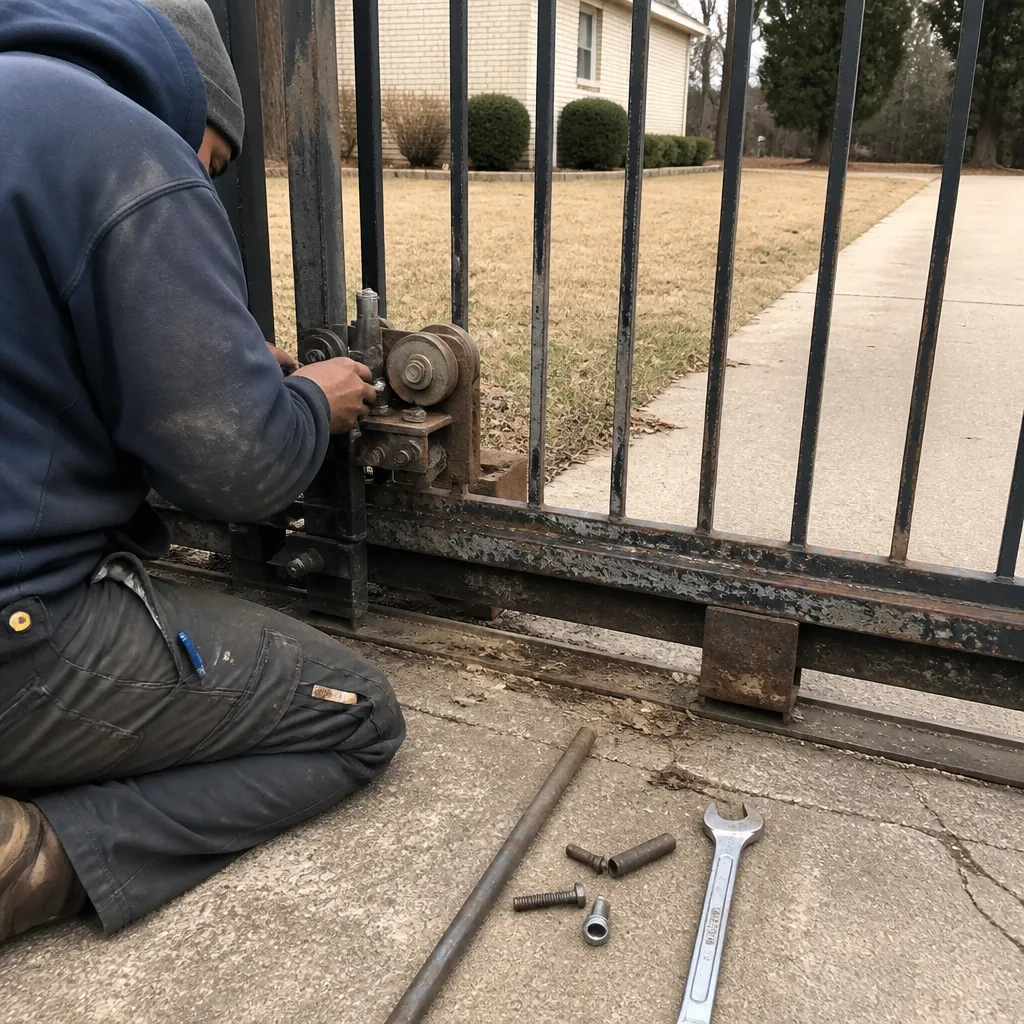 Before
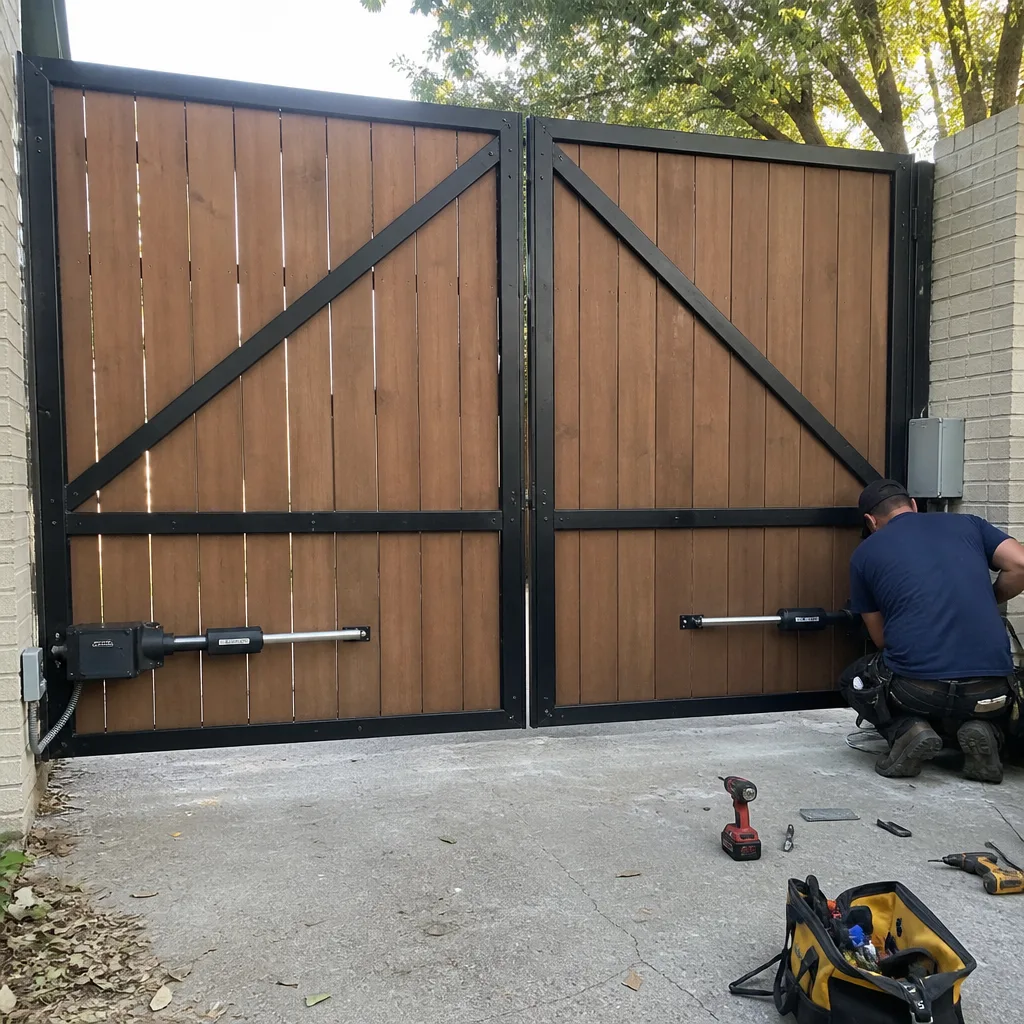 After
After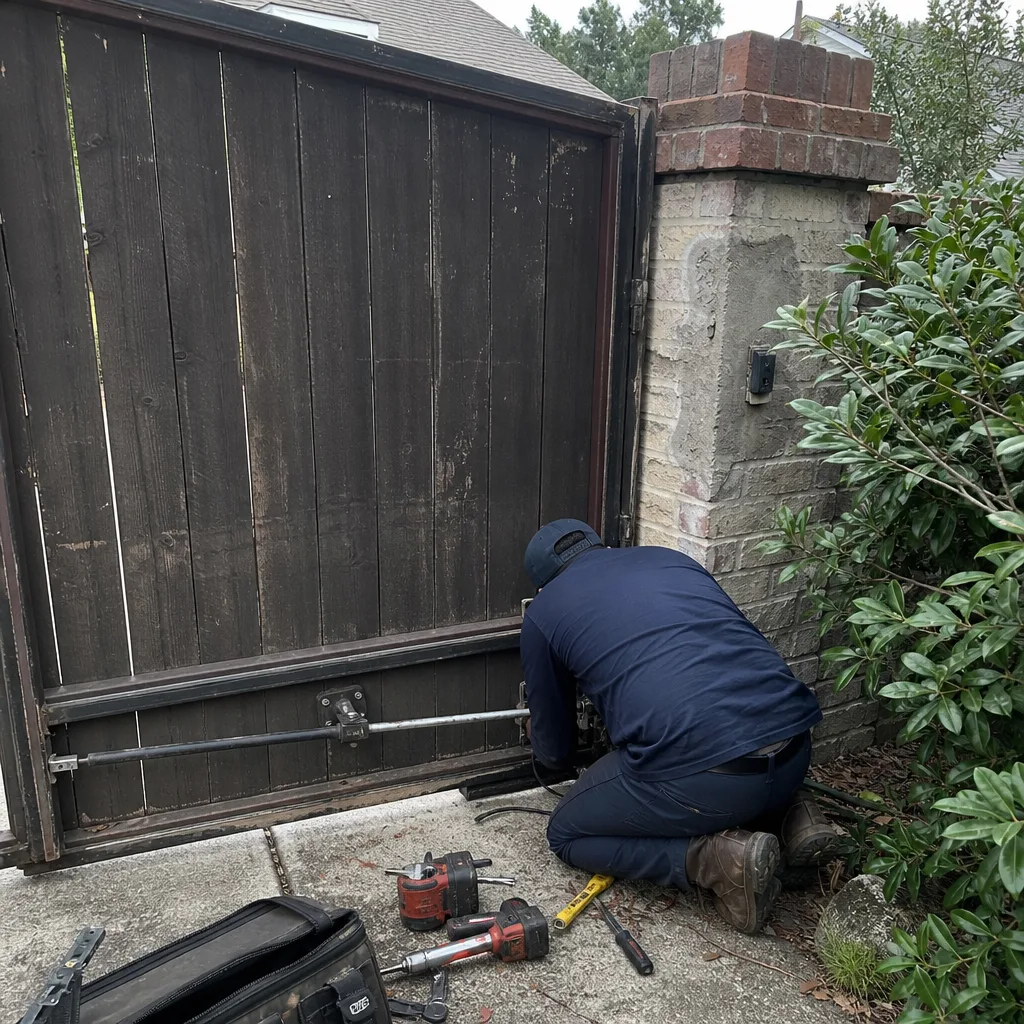 Before
 After
After Before
 After
After